The Drop
News and Resources from AXIS Flight School
-
 On February 25-26, Arizona X-FORCE attended the 2017 Paraclete XP Indoor Championships in Raeford, North Carolina. This was the first competition in VFS history where the discipline was expanded to 10 rounds with the addition of new blocks and randoms (18-22 & O-Q).
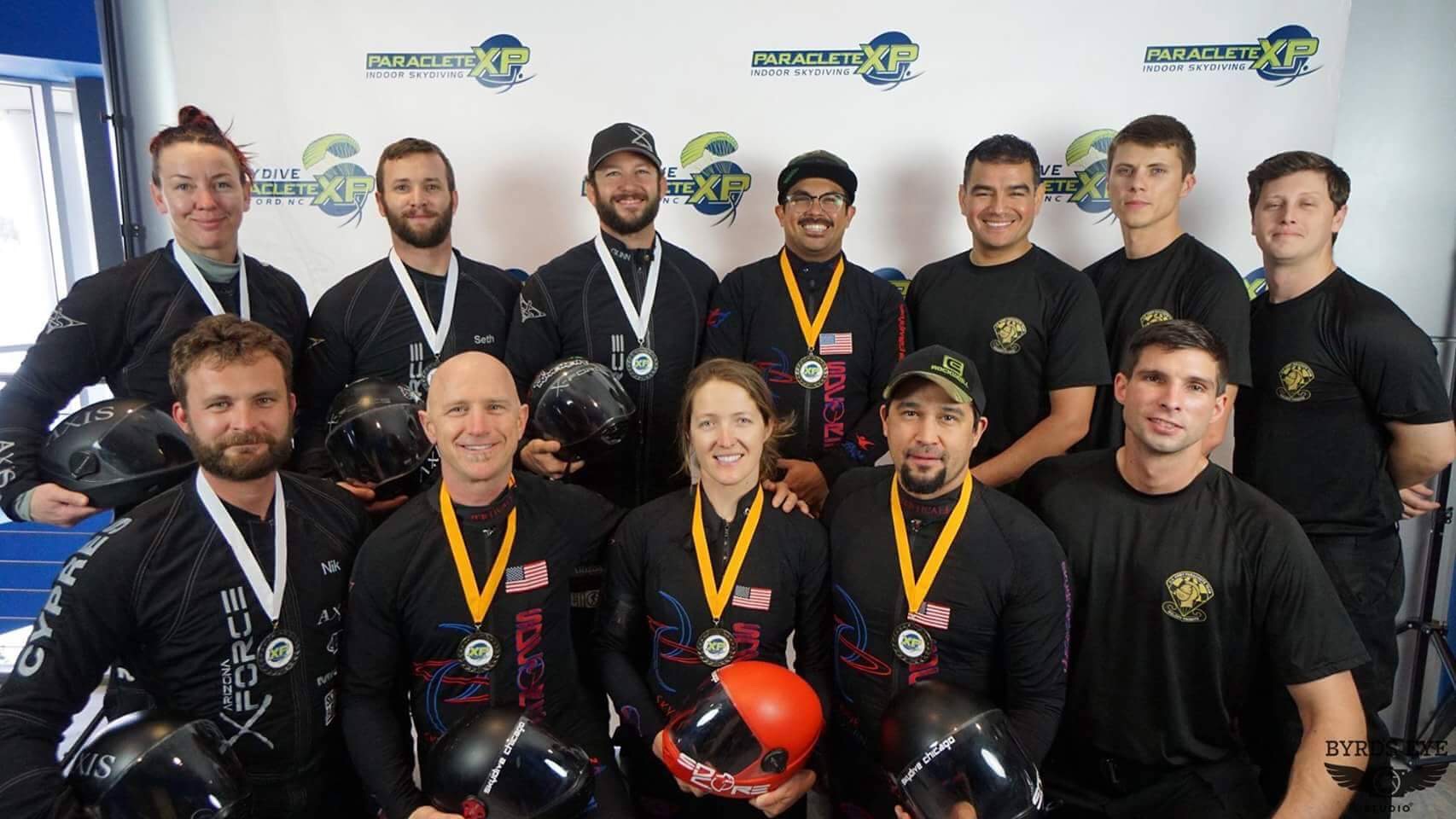
4-way VFS Open podium: 1st SDC Core, 2nd Arizona X-FORCE, 3rd Golden Knights VFS. Check out Skydivemag.com and NSL for more information about the event, and or watch the event video on Facebook.
-
PICTURE PERFECT: Man takes pictures, 15,000 feet up in the air

“Skydiving, as one can imagine, is dangerous enough, but try to imagine the added element of trying to capture the perfect picture, 12,000 feet up in the air. One photographer does exactly that, as a career.
“As a kid, I’ve always been pretty active, always enjoyed extreme sports, whether it was doing the skateboarding thing or riding bicycles,” said Niklas Daniel. “In this case, this was just another thing I wanted to experiment with.”
One can call Daniel a skydiving expert. To date, Daniel has made more than 10,000 jumps, and counting, and he is now known as one of the best behind the camera, at 12,000 feet.
Daniel’s love for photography began at an early age, and after falling in love with skydiving, he blended his two passions.
“The moment is very fleeting,” said Daniel. “So, if you have a shot in your head that you would like to create, it takes a lot of practice, a lot of training, also a little engineering to try and put that together.”
Daniel also described the difference between photography works that take place on terra firma, and those that take place up in the air.
“If you’re taking a photograph on the ground, depending on the subject, you maybe have the ability to take a test shot, take a look at the settings, and then be able to adjust until you get that right shot,” said Daniel. “Skydiving is more of sport photography, where they’re trying to get that perfect shot and it’s not something that you can recreate necessarily.”
Daniel said in order to be a good aerial photographer, you’d have to be a great skydiver.
“Not is it enough that I have to fly my own body or my parachute for example, but I have to be able to do that without having to think about it that much that I can now focus on the shot,” said Daniel. “In addition to that, I have to be very aware of my closing speeds with other people, the distance I’m away from them and I also have to remain altitude aware. I can’t look at my altimeter constantly, because that would ruin the shot.”
Equipment is also important. Daniel’s helmet works as his rig, and his tripod is his own body.
Over the years, Daniel has documented other people’s jumps, along with the formation of skydiving teams. He has also produced training video. Daniel said some of his favorite pictures to take are during competition with his team.
“I really enjoy the pressure of having to get a specific shot, and then being able to present that to the judges,” said Daniel. “That’s been my expertise, but I also really enjoy the off-the-wall projects, so whether someone wants to light a parachute on fire or something kind of more in that direction. Something you don’t see everyday.”
Besides doing what he loves everyday, Daniel also gets to share his passion with others who might not get the chance to. He and his wife, Brianne, support “Operation Enduring Warrior” by donating their time to help wounded veterans enter the sport of skydiving.
Skydiving, one could say, is a sport that has taken Daniel to heights he never could have imagined.” – reported by Danielle Miller of FOX 10 News
For more information on skydiving photography, please click here, and check out the PictureCorrect interview by Richard Schneider.
-
2016 Skydive Arizona film festival submission. Video edited by David Arnett.
-
 On December 8-9, AXIS Flight School and Arizona X-Force attended the indoor skydiving competition “Battle of the Blades” at iFly Seattle, Washington.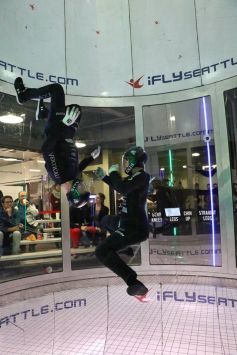
Nik and Brianne (AXIS) during the 2-way VFS competition. This was the the 3rd and final stop of the 2016 IBA (international body flight association) competition tour. The event was streamed live online where anyone could watch the athletes compete in their respective events.
Disciplines included: 2way FS, 4way FS, 2way VFS ,4way VFS, D2W, D4W, Freestyle, and Freestyle Junior.
The following words are by the IBA.
2way FS
The meet kicked off Thursday afternoon with 2way FS, with 4 teams in the #battleoftheblades – from professional skydivers Axis to pick-up team 11-year-old Elijah and Sally. Axis ultimately scored the gold medal, whereupon they decided to kindly donate their winnings to second place winners, Team Squared, a pair of teenage twins out of iFLY Sacramento.
2way VFS
2way VFS, the 3-time most popular event at IBA meets, where 17 teams competed across all 4 classes. Team Blue Knees won Rookie with a 16.5 average, Intermediate gold was captured by Brad & Stryker with a 15-point lead, Advanced was won by Natalie & Leecoming in with exactly 100 points after 6 rounds, and Open was nabbed by the indisputable champs Josh & Mikey of Collective. Collective also took gold at the Rosemont meet, however their total increased by an impressive 42 points in Seattle.
4way VFS
4way VFS also featured 4 teams, with Arizona XForcegrabbing the gold with a total of 166 points, 41 more points than 2nd place team Pantene Cartel and exactly 100 points over third place team Kill Bill.
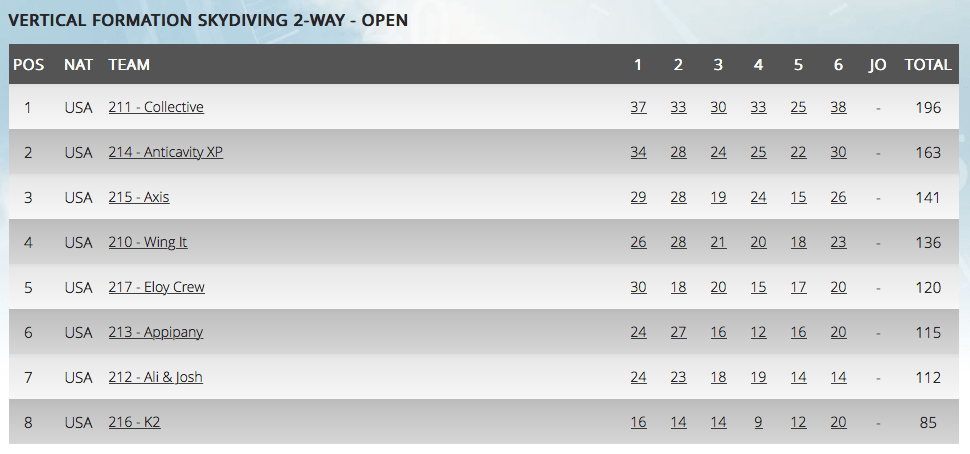

AXIS completed the 2-way VFS discipline with a 23.5 average, while Arizona X-Force finished the 4-way VFS category with a 20.75 average.
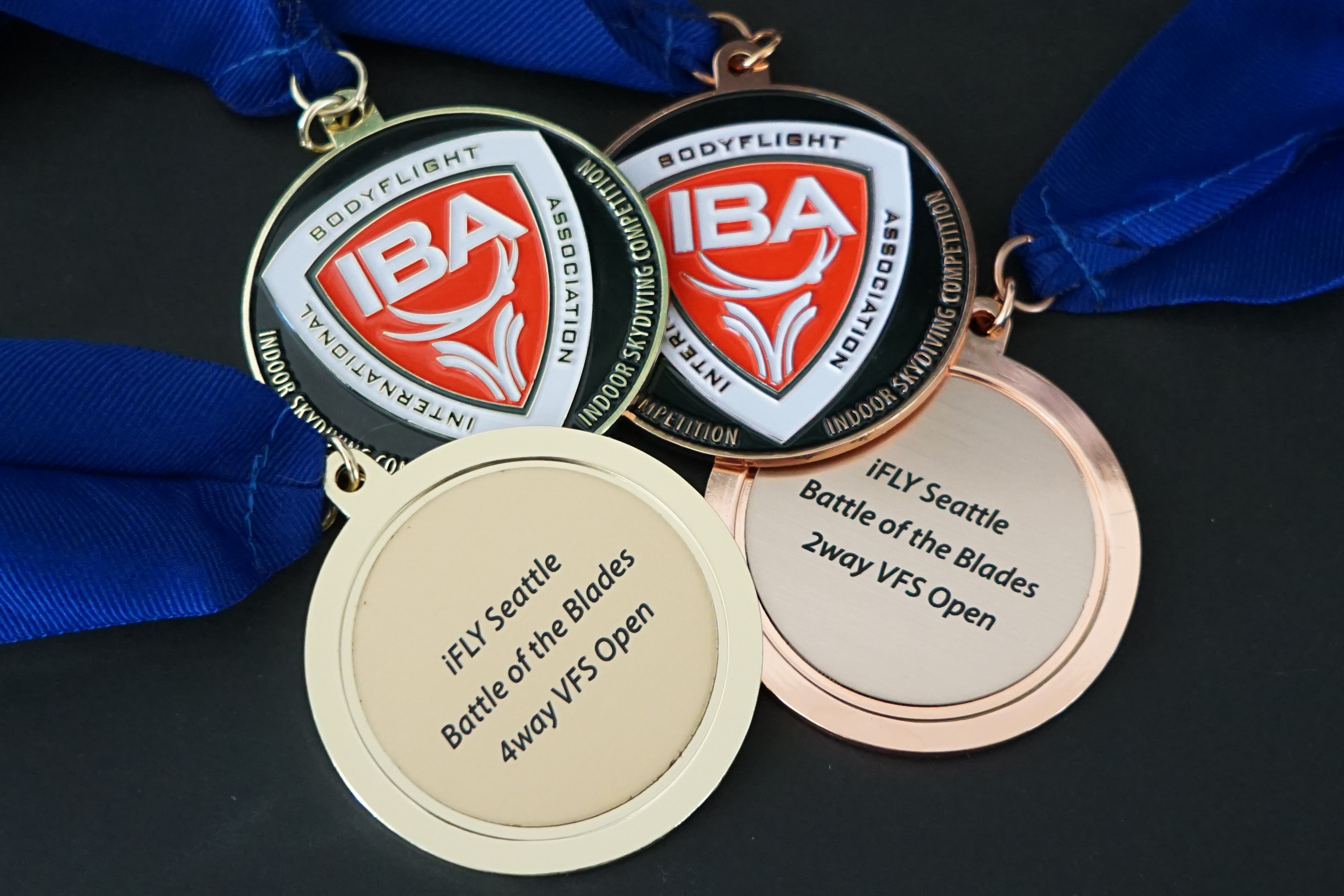
For all competition scores, please visit the In time scoring website.