AXIS Flight School offers structured, progressive training designed to help sport skydivers of all levels achieve their personal and competitive goals. Whether you’re looking to improve your canopy skills, master new freefall techniques in the tunnel and sky, or prepare for competition, our world-class coaches will guide you every step of the way.
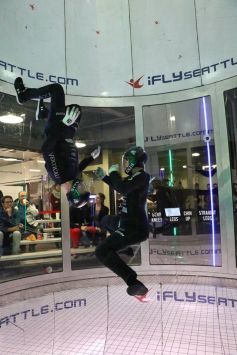
Nik and Brianne (AXIS) during the 2-way VFS competition.
This was the the 3rd and final stop of the 2016 IBA (international body flight association) competition tour. The event was streamed live online where anyone could watch the athletes compete in their respective events.
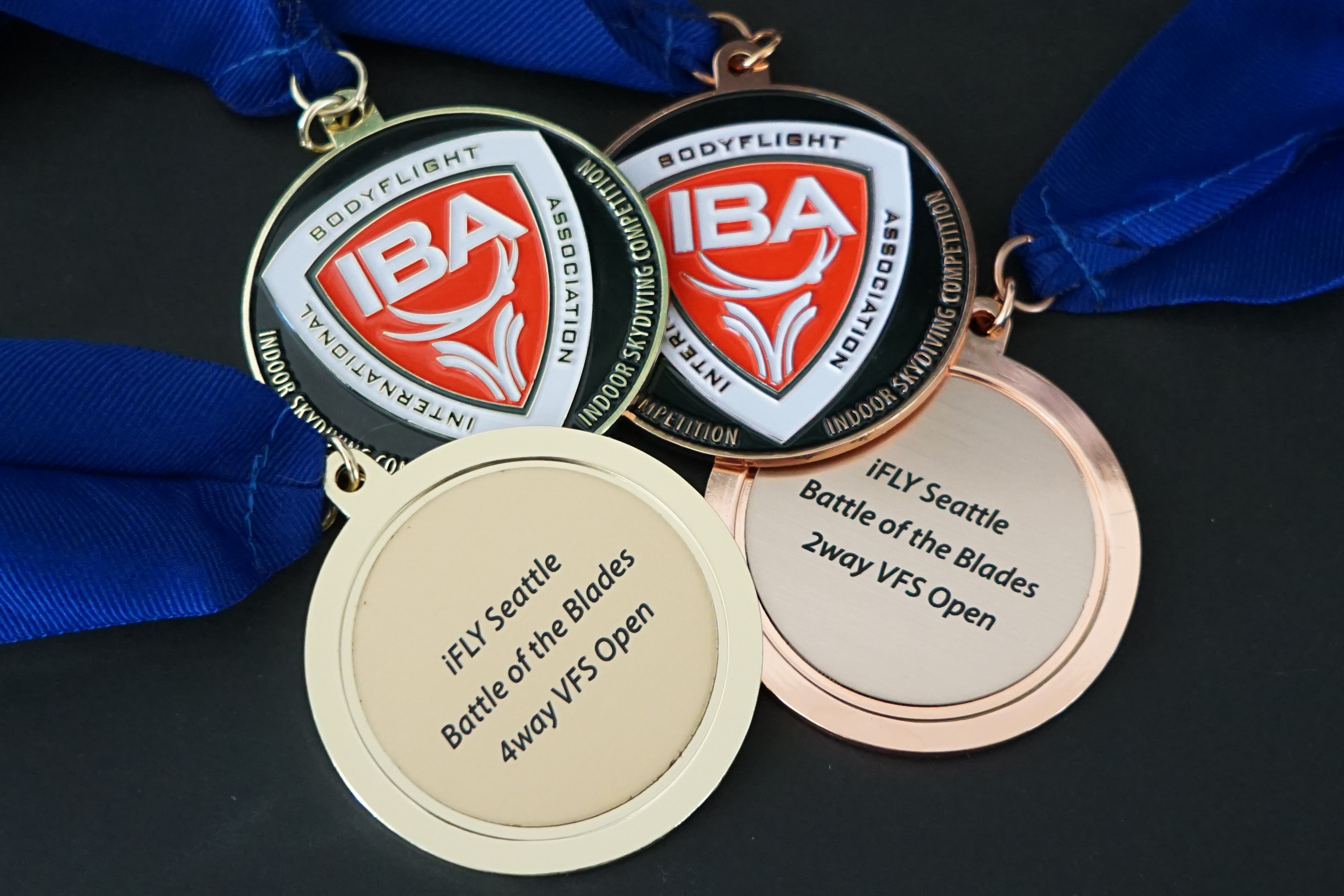
The meet kicked off Thursday afternoon with 2way FS, with 4 teams in the #battleoftheblades – from professional skydivers Axis to pick-up team 11-year-old Elijah and Sally. Axis ultimately scored the gold medal, whereupon they decided to kindly donate their winnings to second place winners, Team Squared, a pair of teenage twins out of iFLY Sacramento.
2way VFS
2way VFS, the 3-time most popular event at IBA meets, where 17 teams competed across all 4 classes. Team Blue Knees won Rookie with a 16.5 average, Intermediate gold was captured by Brad & Stryker with a 15-point lead, Advanced was won by Natalie & Leecoming in with exactly 100 points after 6 rounds, and Open was nabbed by the indisputable champs Josh & Mikey of Collective. Collective also took gold at the Rosemont meet, however their total increased by an impressive 42 points in Seattle.
4way VFS
4way VFS also featured 4 teams, with Arizona XForcegrabbing the gold with a total of 166 points, 41 more points than 2nd place team Pantene Cartel and exactly 100 points over third place team Kill Bill.
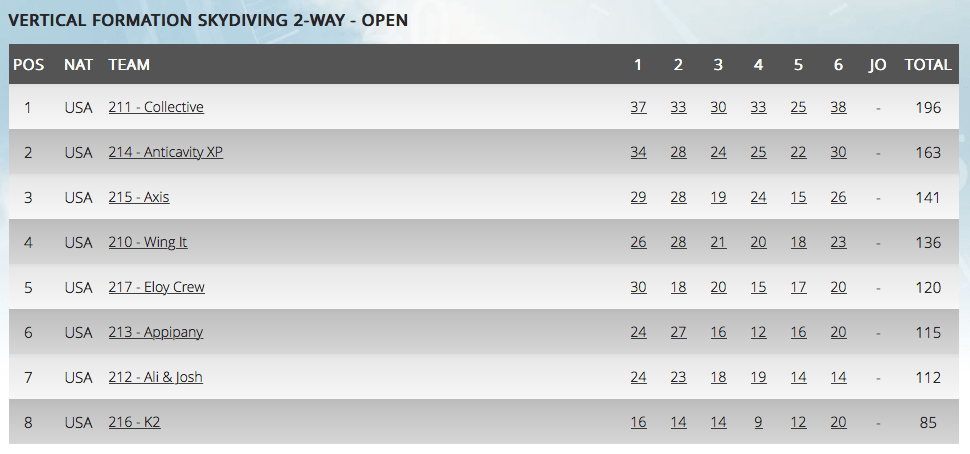
AXIS completed the 2-way VFS discipline with a 23.5 average, while Arizona X-Force finished the 4-way VFS category with a 20.75 average.
For all competition scores, please visit the In time scoring website.
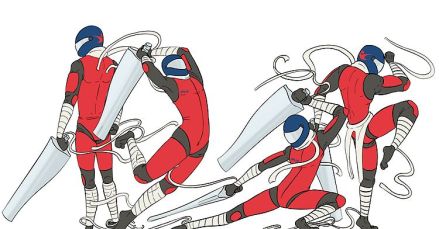
I would like to thank Lesley Gale at Skydivemag for publishing a series of papers I have put together about body-flight. These articles highlight some observations I have made over the years while skydiving and tunnel-flying.
The ideas presented in the paper are a type of bookkeeping that can outline the different ways a skydiver or tunnel flyer can move in the air. The language developed and its use are meant to best represent the activity, and help lay a theoretical concept or knowledge foundation.
Here are the 4 installments:
Episode 1 – The Axis system and Frames of reference
Episode 2 – Six directions of movement, Orientation borders and Range of motion
Episode 3 – Move combinations, including Multi-axis combinations
Episode 4 – Terminators, Real world applications and Conclusion
Episode 4 will complete part 1 of this BodyFlight Theory paper, the Skydiving Coordinate System. Other parts will be subsequently added to cover theory and application for all human flight disciplines, through understanding the principles of human flight.
I invite comments, contributions and critique in order to advance the theoretical knowledge of the sport of body-flight (please send to articles-at-AXISflightschool.com)
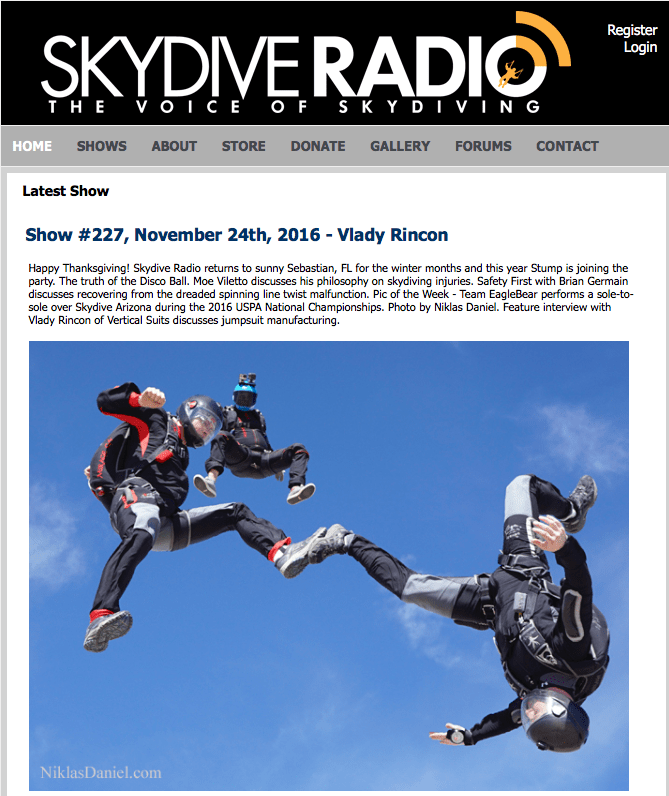
EagleBear (Andre Gerner, Joseph Gerner and Nathan Roth) turn points on the way to taking the silver medal in open mixed formation skydiving at the USPA Nationals in Eloy, Arizona.
I would like to thank Dave at Skydive Radio for making my image below their pic of the week! Skydive Radio is the world’s leading internet radio show dedicated to the sport of skydiving. Weekly episodes include commentary, feature interviews with industry insiders, listener-contributed photos, and e-mails from an audience that spans the globe.
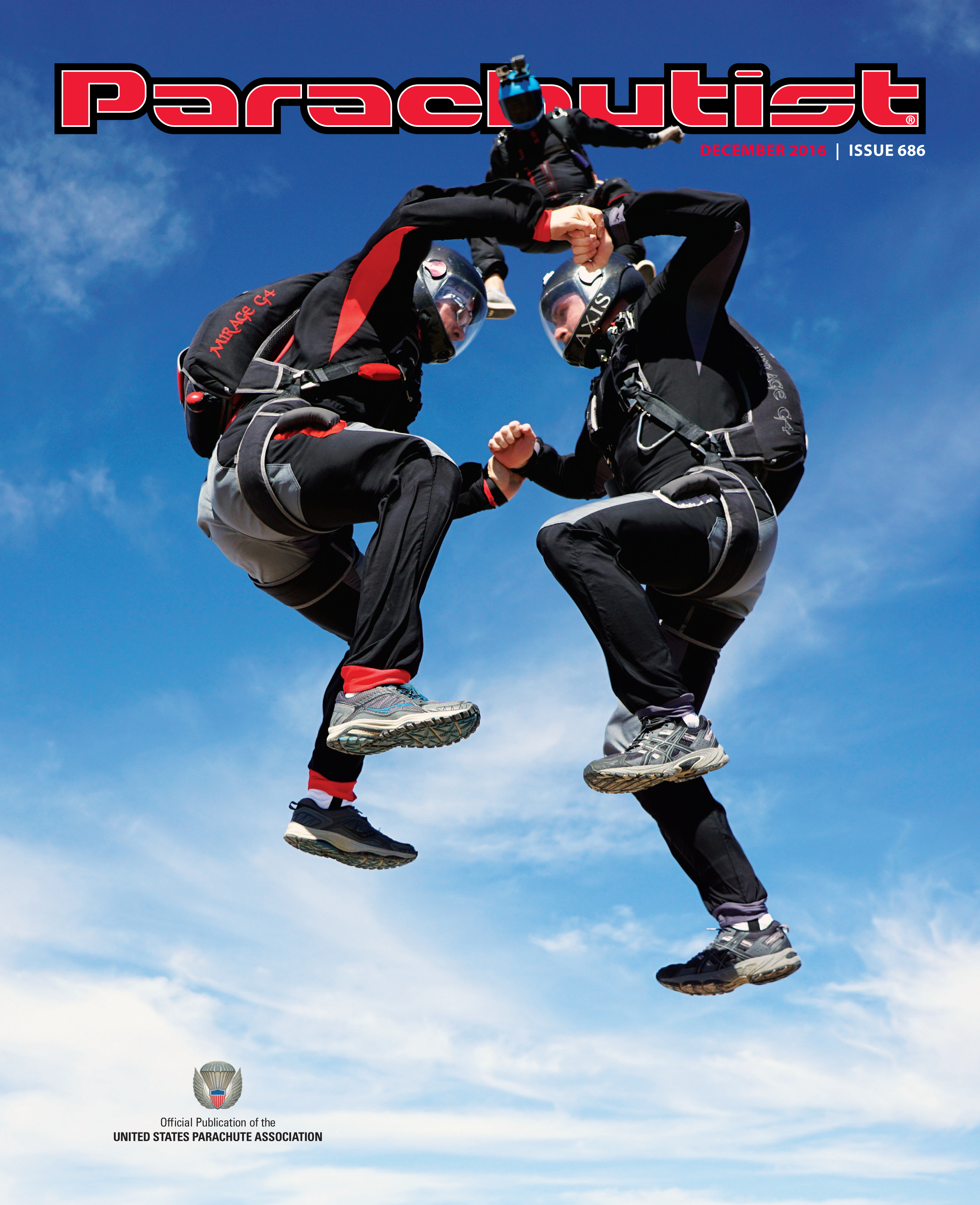
Brian Giboney wrote his first “Profile” column for the February 1999 edition of Parachutist, and he hasn’t slowed down since. A few days ago, AXIS Flight School received a letter from Brian that explained he had reached his 200th profile, which took him 17 years without missing an issue! A feat AXIS respects and is blown away by. AXIS currently has 68 Foundations of Flight installments which it started contributing to the magazine non-stop since April 2011, and therefore we can appreciate the amount of work that goes into writing a monthly column!
Congratulations Brian on your success. We look forward to reading more profiles to learn about the individuals who influence our awesome sport.
It has been 10 years since I first started experimenting with creating skydive related educational videos. Back in 2006, the internet was a very different place. As connection/download speeds started to improve, and online videos become more prevalent, new platforms of communication started to emerge. One of these was called Expert Village; a site I was introduced to by a friend and co-worker of mine, Patrick Eaves of WingEnvy Paragliding.
At that time, there were only two vertical wind tunnel in the US: Orlando Florida and Perris California. Other wind tunnel designs, like flyaway in Las Vegas were available, but they did not offer the clean, wall-to-wall air flow that the newer Skyventure designs provided. This is what set Skyventure tunnels apart from their competitors, and is what made these tunnels so desirable to skydivers. They better replicated the feel of free fall, and skydivers were able to train with their personal equipment (jumps suits, helmets, and in some cases rigs if covered by a sleeve).
From 2005 – 2007 I was a full time tunnel instructor (IBA certified) and coach at the Perris Skyventure wind tunnel. During the time, many of the worlds best coaches would visit the Perris drop zone and tunnel to hold skills camps and organize events. This was the time and place to be if your goal was to train hard and learn a lot. I was fortunate enough to be able to fly with some of the most respected names in every discipline, and watch them coach for hours each day at close proximity. I quickly realized that each coach had their own personality, values, and way of teaching. I observed not only what they taught, but also how they connected with their students.
Personally, I am a very analytical person and like to pick concepts apart mentally, make predictions, and then test ideas practically. This has always driven my training and coaching style. The online tutorials presented an opportunity to not only market my services, but also forced me to think more critically about the information I was sharing. These early videos were low budget and shot in one afternoon without a real script to speak of. The idea was to make people aware of the newly arising discipline (tunnel flying), and to let people know that professional coaching was available.
Looking back at the 10 year old footage, I have to say that I still agree with most of the information that is being presented. It encapsulated my working knowledge, and what was taught during that time. However, my coaching process has evolved substantially over the years.
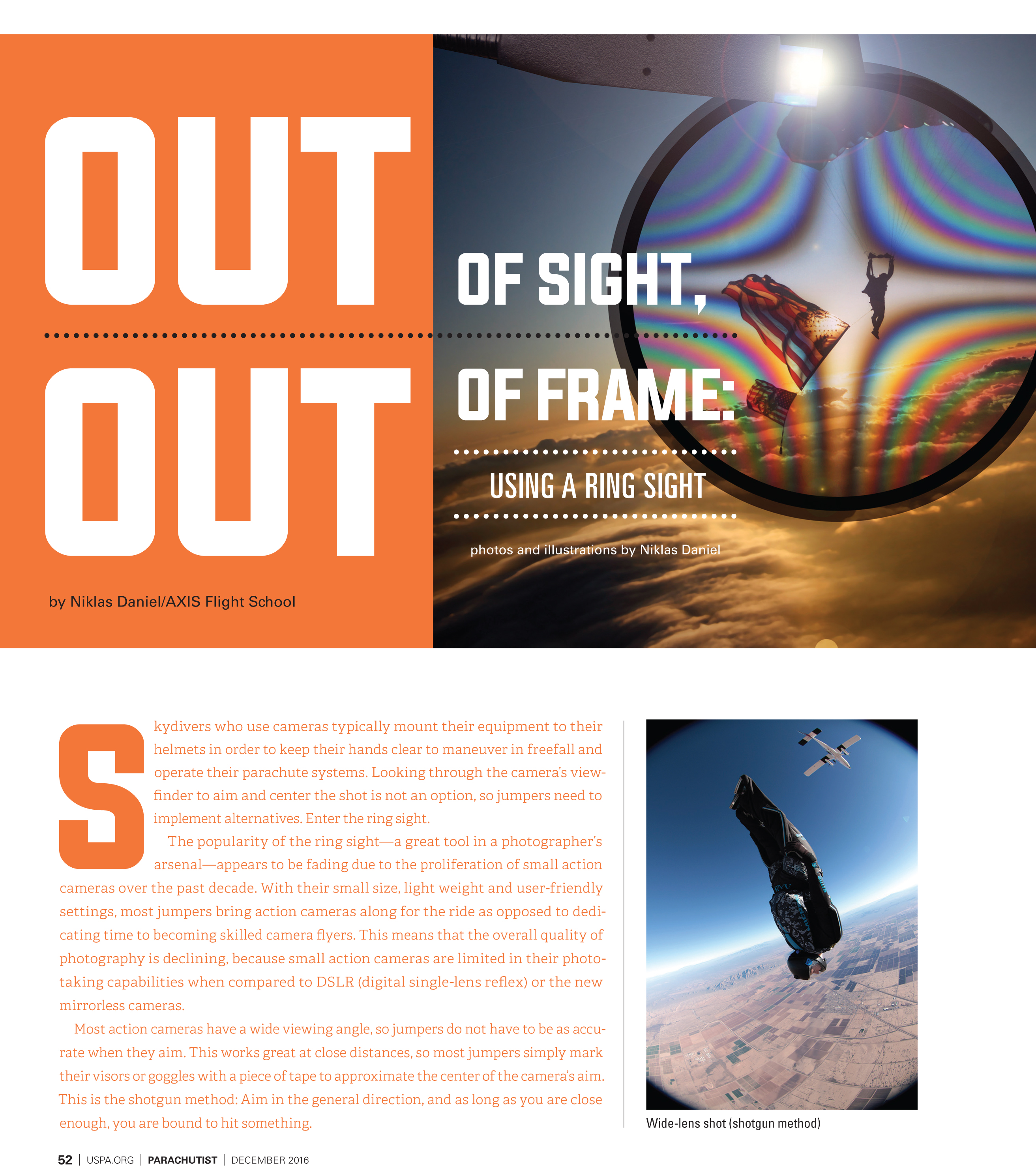
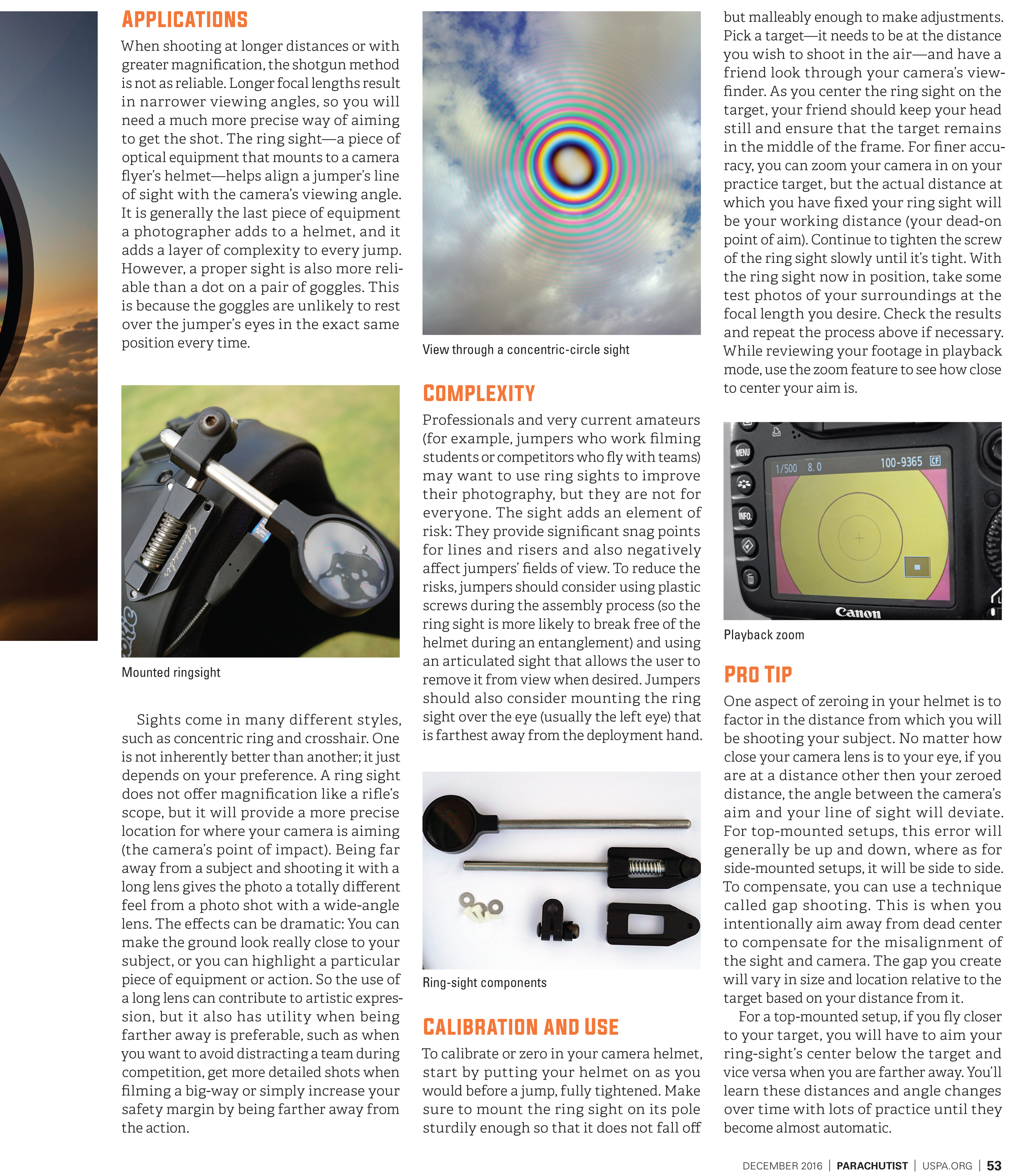
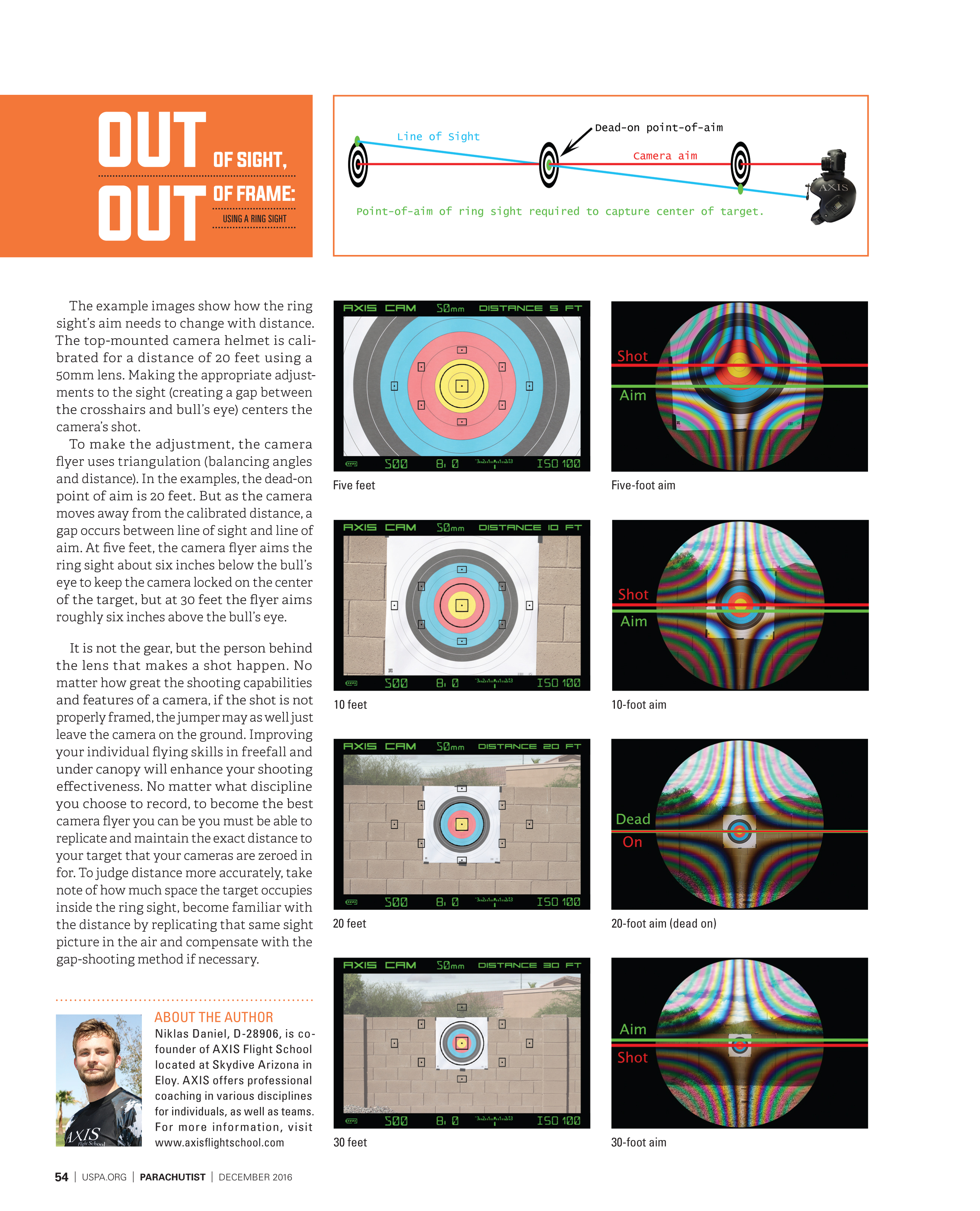
I am still actively engaged in creating online content such as tutorials and instructional videos on the AXIS Flight School YouTube channel, as well as through USPA’s monthly printed publication Parachutist.
Foundations of Flight is a monthly column that AXIS contributes to USPA Parachutist magazine. These how-to videos and articles are not just limited to free fall skills, but have been expanded on to also include canopy skills and much more.
Of course none of the tutorials have ever meant to be a substitute for professional coaching. They are meant to spark curiosity and provide some insight to a training method to jumpers who do not have access to professional coaching. They serve as an educational guideline and a small glimpse into what is out there.
In 2010, AXIS moved its head quarters to Skydive Arizona, which is the perfect training ground for skydivers who want to sharpen their skills and learn at an accelerated pace. This is because the drop zone has great jumping weather year round, a massive fleet of aircraft, and a wind tunnel that is located on the drop zone. For more information about coaching or AXIS Flight School, contact us at Info[at]AXISFlightSchool.com