AXIS Flight School offers structured, progressive training designed to help sport skydivers of all levels achieve their personal and competitive goals. Whether you’re looking to improve your canopy skills, master new freefall techniques in the tunnel and sky, or prepare for competition, our world-class coaches will guide you every step of the way.
Wind tunnel time improves balance, control, and safety for speed skydivers. Here’s why training slow helps you fly fast.
Body-flight is balance in motion
Body-flight, in all its forms, is a study in balance. By fine-tuning the drag forces around their centre of mass, a flyer can maintain control and maneuver efficiently through the relative wind. The better your balance, the less likely you are to go unstable during a high speed dive. Your corrections along the way are also going to be more refined as not to over or under correct.
This balance becomes especially critical in speed skydiving, where the goal is to descend as fast as possible—safely, so you can, you know, do it again.
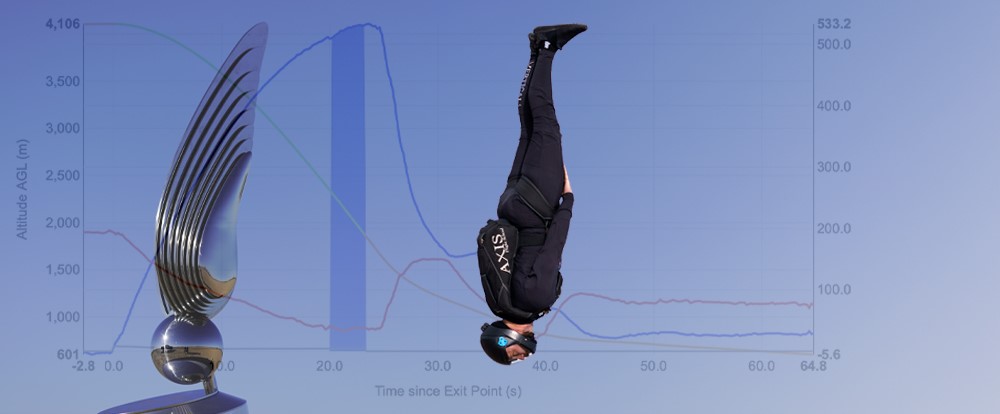
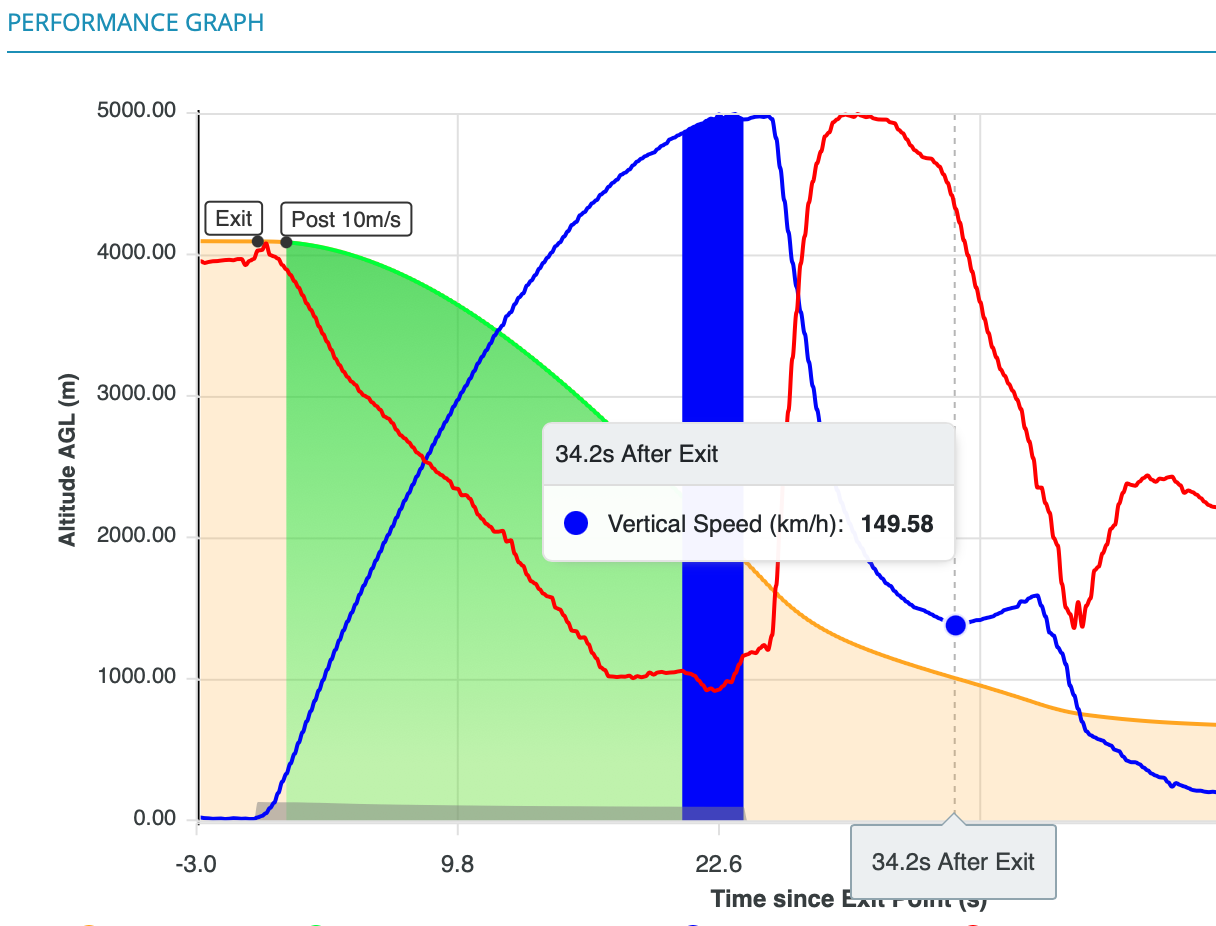
During the 2025 USPA National Speed Skydiving Championships, AXIS Flight School’s Niklas Daniel reached an incredible top speed of 544.25 km/h — 338.18 mph. As Nik transitions out of his dive and prepares for parachute deployment, his vertical descent frequently slows to 150kmh (93mph) or less. That is significantly slower than the average belly to earth skydiver who fall at around 120mph – keep in mind Nik does this in a skin tight suit which offers little air resistance. That’s a fall rate range of nearly 395 km/h (245 mph) within a single jump.
149.58 km/h (92.95 mph).
Managing that range isn’t just about performance. It’s about safety. The smoother and slower the transition into deployment, the less stress is placed on both the body and the equipment.
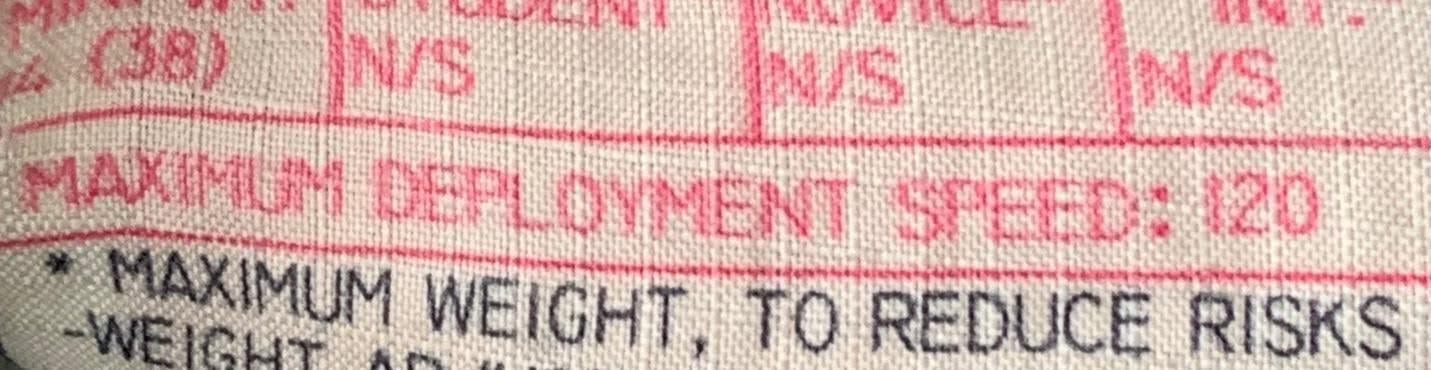
⚠️ Hey! Check the warning label on the top skin near your canopy’s tail for your parachute’s Skill and Operating Limits. Aim to keep your deployment speed at or below 120 knots (222 km/h / 138 mph)—a key benchmark for safe openings.
Why wind tunnel training still matters for speed skydivers
Vertical wind tunnels can’t replicate the full conditions of a 350 mph dive—most top out at 180 mph. Even if a tunnel could produce higher speeds, it is unlikely that a facility would allow a human to fly in such fast airflow; a minor wobble at that velocity could send a flyer slamming into a wall or ceiling.
But that doesn’t mean that your tunnel time is wasted. Quite the opposite, as a matter of fact.
For speed skydivers, the tunnel offers a controlled environment to refine foundational skills that directly translate to sky performance.
Key tunnel skills for speed skydivers
Slow belly flight: Build stability and awareness at lower fall rates—vital for smooth, low-stress deployments.
Back-flying and barrel rolls: Develop recovery skills to regain control after instability.
Air awareness: Long tunnel sessions sharpen sensory feedback and balance—the foundation of efficient flight.
With professional coaching, flyers can fine-tune these control skills and expand their overall flight envelope, gaining the body intelligence that separates good flyers from great ones.
What the tunnel can’t teach you
The tunnel can’t reproduce:
The exit presentation and flying the hill during the initial acceleration phase of a speed dive.
The aerodynamic forces beyond 200 mph that require quick and acurate reflexes to maintain control.
Even so, coupling tunnel work with tracking and angle-flying practice gives skydivers a rounded skill set for entering the speed discipline confidently.
The takeaway
Wind tunnel training won’t make you a speed champion on its own—but it will make you a smarter, safer, and more adaptable flyer.
Mastering control at both ends of your fall-rate range is key to flying fast and landing healthy.
“Speed skydiving isn’t just about flying fast. It’s about mastering how—and when—to slow down. Do it too early and you negatively effect your score, too late or ineffectively and you risk having a hard opening.” — Niklas Daniel, AXIS Flight School
Ready to roll back the throttle?
Book a tunnel coaching session with us to build the balance, awareness, and precision that make high-speed skydives smoother—and safer. Also, get IBA sign offs in the process!

Leave a comment