AXIS Flight School offers structured, progressive training designed to help sport skydivers of all levels achieve their personal and competitive goals. Whether you’re looking to improve your canopy skills, master new freefall techniques in the tunnel and sky, or prepare for competition, our world-class coaches will guide you every step of the way.
A quick guide to understanding current FAI speed skydiving records — what G-1 and G-2 mean, how records are classified, and where AXIS's competition results fit in.
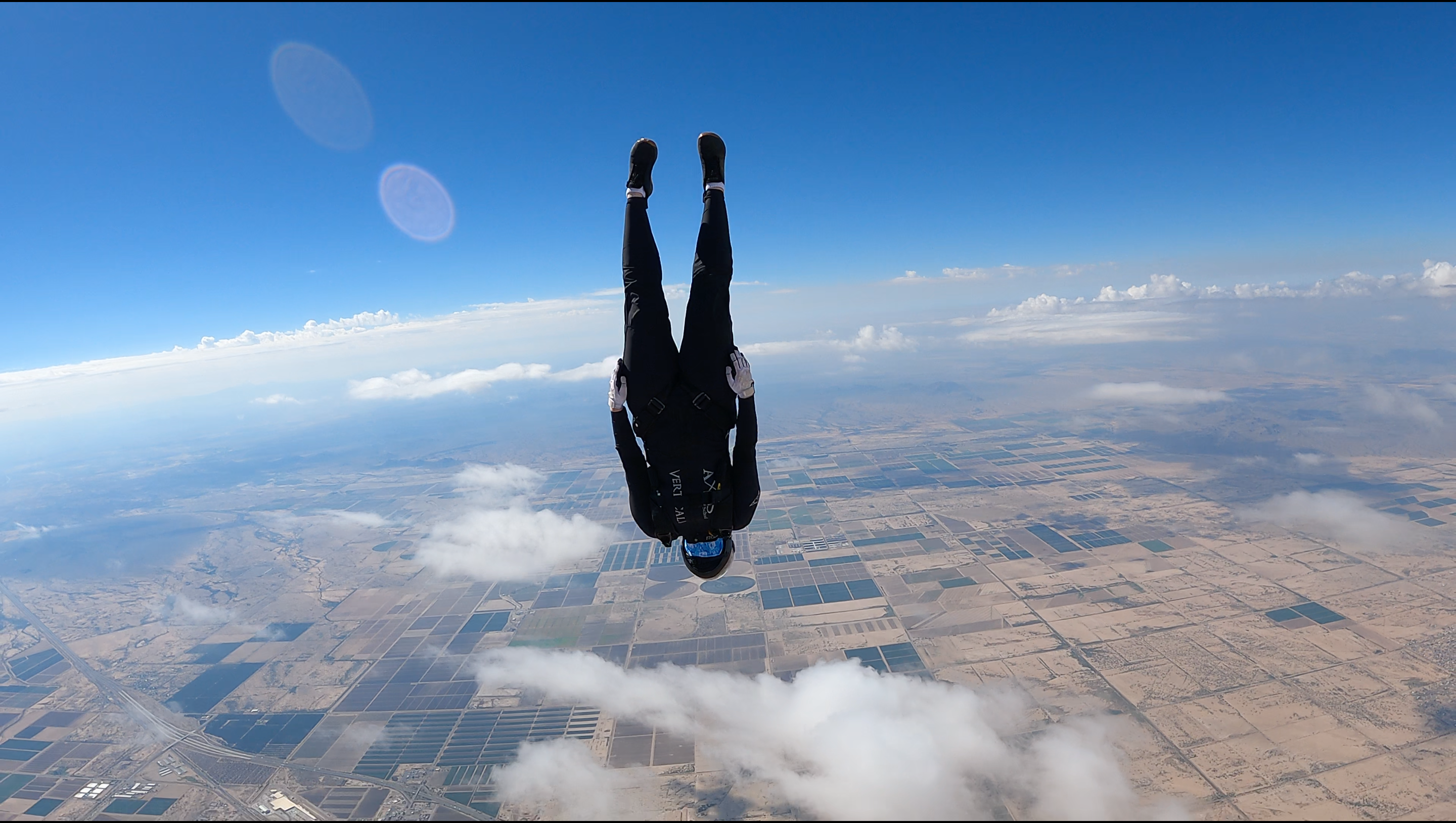
Brianne flying fast over Skydive Arizona. Photo by Niklas Daniel.
What you’re looking at
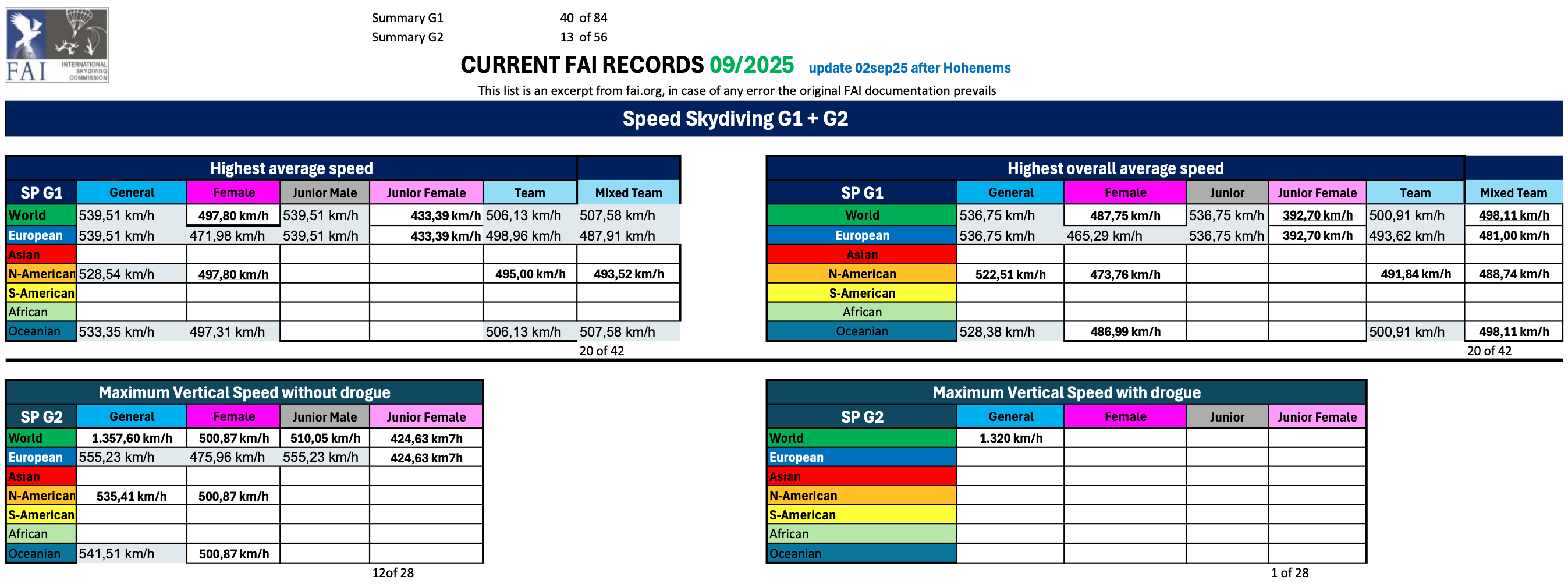
If you’ve ever wondered how official speed skydiving records are tracked and certified, the FAI “at-a-glance” tables offer a fascinating snapshot.
These tables summarise the current world and continental benchmarks recognised by the Fédération Aéronautique Internationale (FAI) — the governing body for air sports worldwide — as of September 2025, following the Hohenems competition. (In case of any discrepancy, the FAI documentation always prevails.)
It seems silly to have a Maximum Vertical Speed category that involves the use of a drogue, however at extemly high altitudes the air is so thin that maintaining stablity is a serious safety concern – but I digress.
How to read the table
FAI records in speed skydiving fall into two main categories, known as G-1 and G-2.
Category
Meaning
Type of Record
G-1 (Competition)
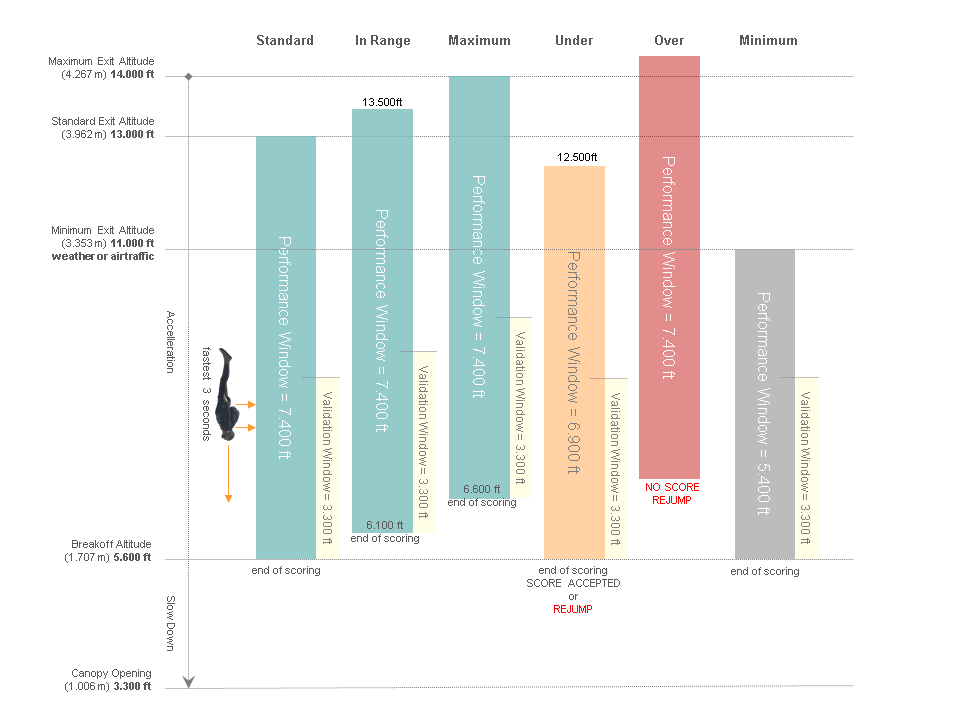
Recognised during sanctioned competitions, using strict format and altitude limits (typically ≤ 14,000 ft AGL).
Average of the athlete’s three fastest consecutive seconds during a dive.
G-2 (Performance)
Recognises absolute or experimental achievements, often outside standard competition format.
May include special equipment or extreme altitudes — for example, Felix Baumgartner’s 1,357.6 km/h Red Bull Stratos jump (2012).
Each category is then divided into classes — Open, Female, Junior Male, Junior Female, National Team, and Mixed Team — and tracked at World, Continental, and Regional levels.
Speed Skydivers cannot use propulsion systems or carry additional weights during competition.
Why the results table is useful
For those following the evolution of speed skydiving, these summaries provide:
Context: How world, continental, and national results compare.
Progress tracking: Where recent competitions have pushed the limits.
Motivation: Benchmarks for current and aspiring competitors.
It’s also a reminder that speed skydiving is not only about raw numbers — it’s about discipline, repeatability, and documentation.
The current snapshot (September 2025)
Highlights from the most recent FAI data:
World record (G-1 General): 539.51 km/h
World record (Female): 497.80 km/h
North American record (G-1 General): 528.54 km/h
World performance record (G-2): 1,357.6 km/h (Felix Baumgartner, 2012)
On ratification
Not every lightning-fast competition run becomes an official record — even when the data proves it happened. Weird, but true. Here’s why.
In speed skydiving, a result can only be ratified by the Fédération Aéronautique Internationale (FAI) if every element of the event meets strict certification standards. That includes not only properly calibrated instrumentation, but also the accreditation level of the judges overseeing the meet.
In some cases, that last point can make the difference between a record being celebrated on paper…or remaining an unofficial personal best, which is great, but not the best outcome for those of us who pour our hearts and souls into this.
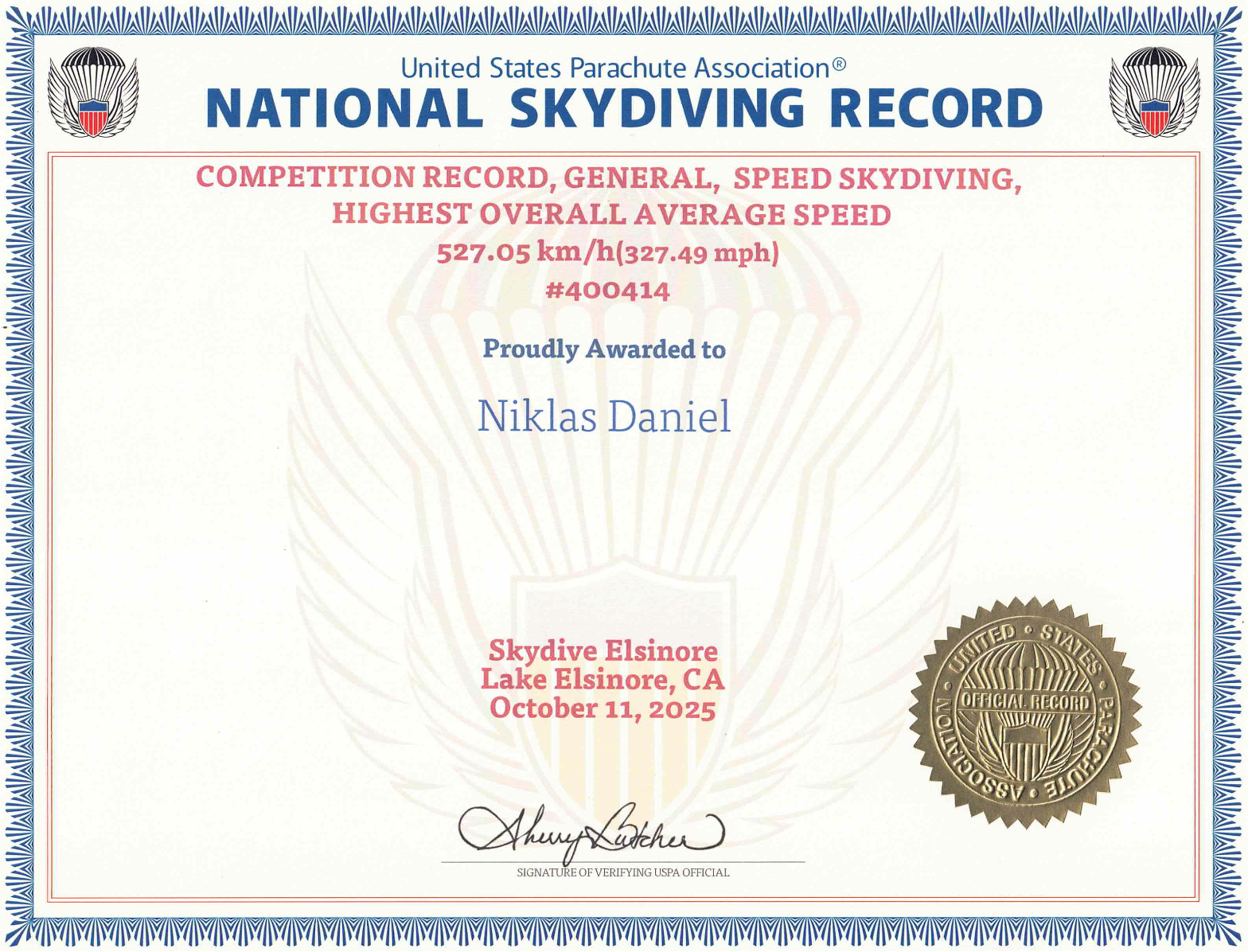
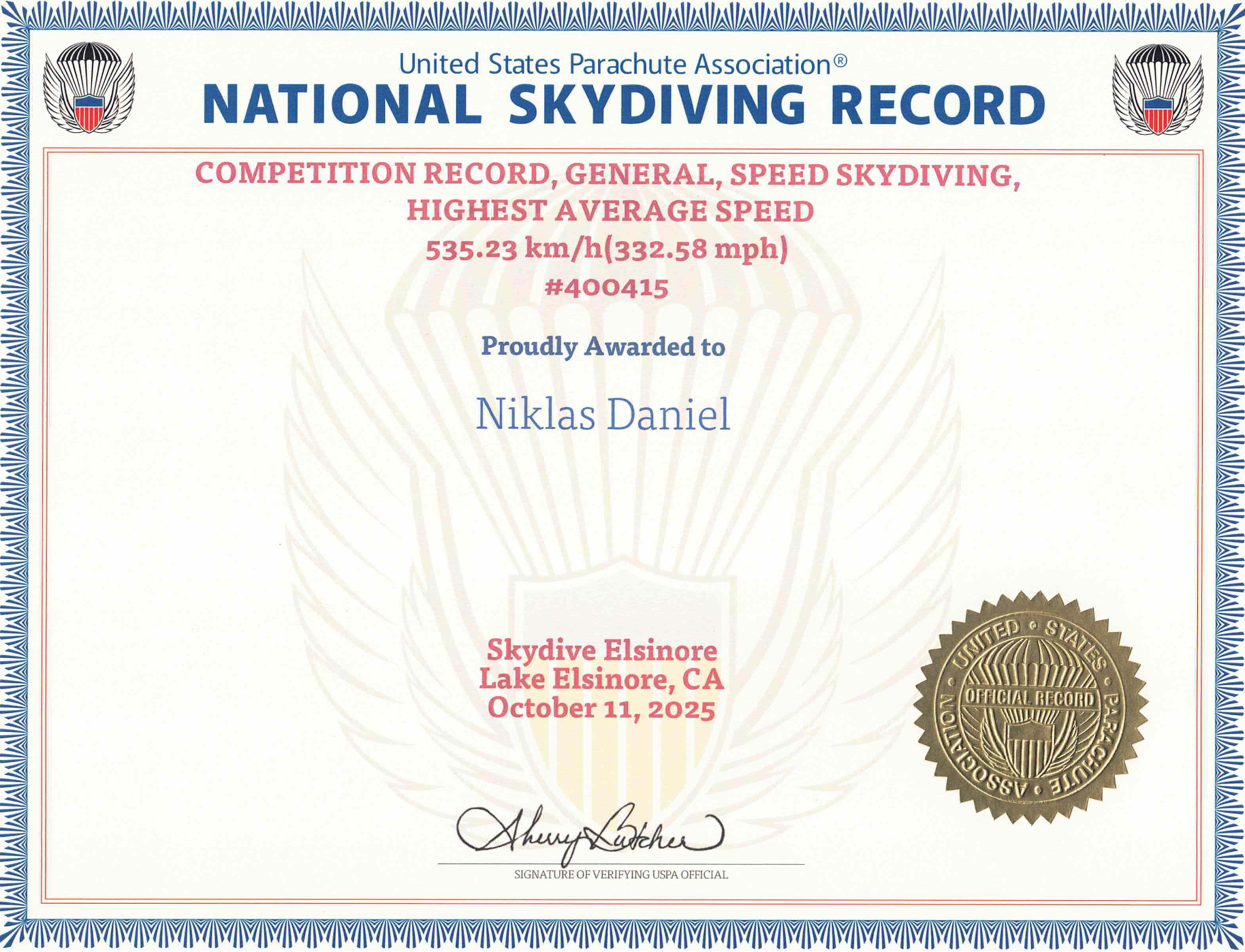
For example, several of Niklas Daniel’s fastest competition runs exceeded the speeds currently listed in the FAI tables, but couldn’t be ratified because the judging panel at those events didn’t hold a high enough rating under FAI rules.
Highest Overall Average Speed 527.05 km/h, i.e. average speed over all 8 competition rounds. Highest Average Speed 535.23 km/h, i.e. single fastest round.
It’s a subtle — and sometimes frustrating — aspect of the sport. But it’s also what makes official records meaningful: they represent not just raw performance, but verified precision under fully standardised conditions.
But hey. There’s always next year.
Looking ahead
With record-level speeds now exceeding 530 km/h in competition and new technology improving data accuracy each year, the coming seasons promise even faster verified results.
Nik’s 2025 takeaway sums it up perfectly:
“There’s always next year.”
✅ Curious about speed skydiving training or competition prep?
Train with us at AXIS Flight School to learn how to fly efficiently, track your data, and push your own envelope safely.
Nik, it was very nice seeing you at the National. My neighbor, Capt Stensgard, really enjoyed meeting the Champ. Be safe and say “hello” to Brianne for me.

 The Drop
Leave a comment