The Drop

News and Resources from AXIS Flight School


  • Ever been the last one out of the plane and wondered if someone drew straws without telling you? Or found yourself floating solo in an ocean of skydivers and wondering how the exit order got so out of whack? Let’s sort that out.

    Here’s the good news: there is a system. A smart one. And when it’s followed well, it means everybody in the air has a safe, happy, drama-free jump.

    Let’s break it down.
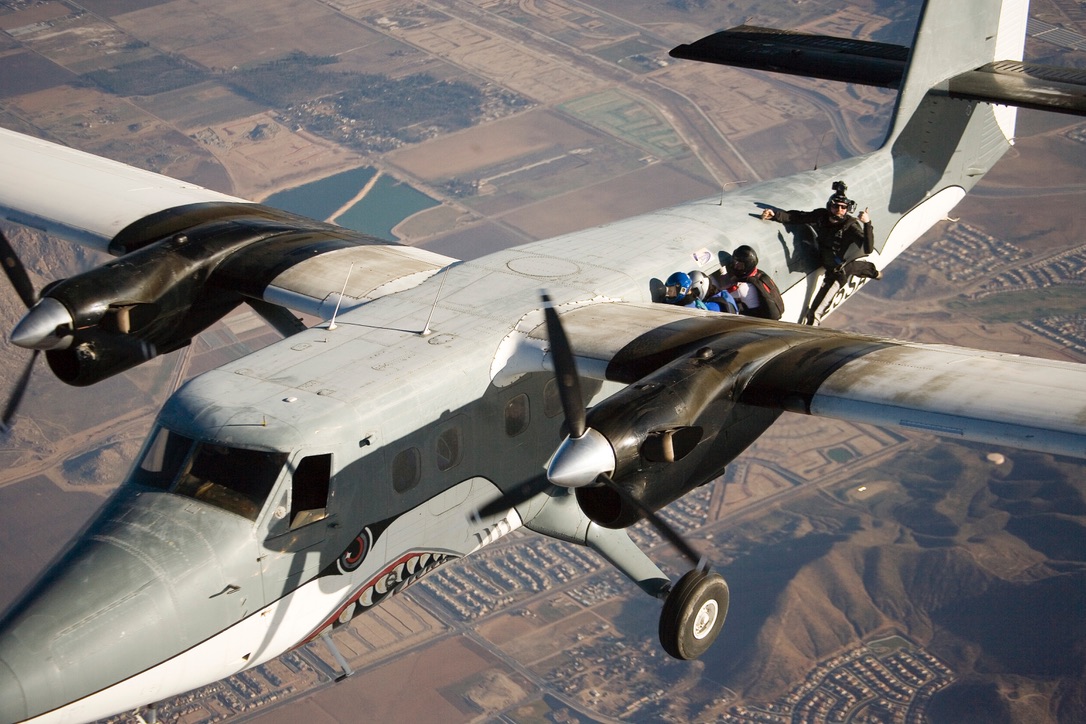
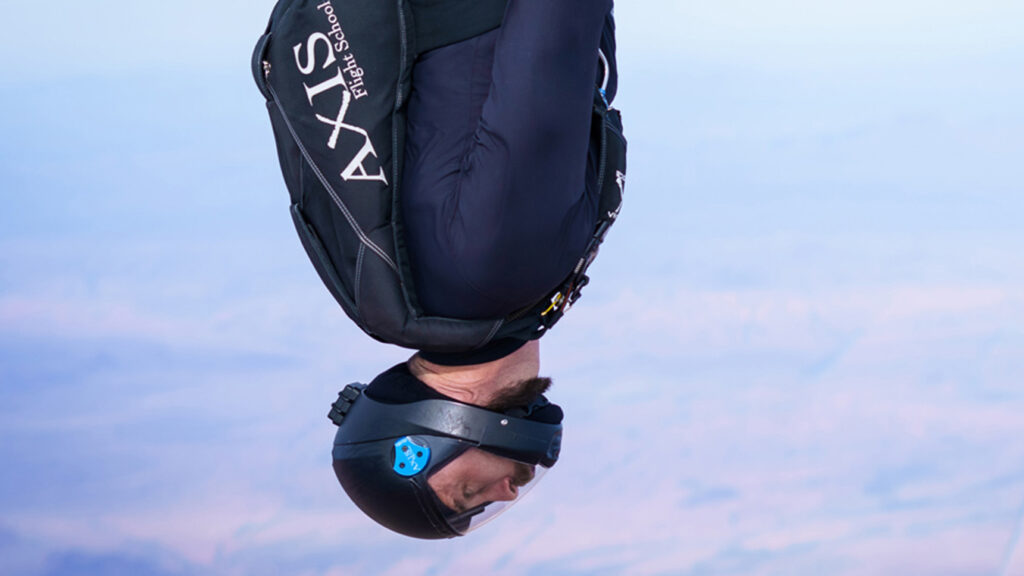
    Photo by Nik Daniel

    What is Exit Order, Anyway?

    At its core, exit order is all about airspace deconfliction—a fancy way to refer to the art of making sure every group that exits the aircraft has enough room in the sky to do their thing without colliding with someone else mid-jump (or mid-deployment). It’s also about managing separation so that if something does go off plan, there’s still enough room to recover.

    To do that, we don’t just think about where people are in the plane. We think about:

    • How fast they fall
    • What direction they’re flying
    • How much time it takes to set up
    • And how their canopies might interact on the way down

    Who Goes First?

    Here’s the general rule:

    🪂 Slow fallers out first. Fast fallers out last.

    This usually means:

    1. Big belly groups
    2. Smaller belly groups
    3. Freefly groups, large to small
    4. Movement jumps (angle/tracking)
    5. Wingsuiters, tandems, AFF, and solos round things out based on DZ policy

    Why the slowpokes first? Because floatier jumpers stay aloft longer and drift more. That drift can actually help increase separation from the faster-falling groups behind them—if we manage the timing and spacing correctly.


    Time = Distance = Safety

    We aim for about 1,000 feet of horizontal separation between groups. That number can flex a bit depending on ground speed, weather, and the number of groups on the load.

    Slower fallers + more drift + properly timed exits = smooth skies for all.

    Just be mindful: more separation = more fuel burn = DZ grumbles. So it’s a balancing act.

    Math not your strongest suit? No problem. AXIS made you an Exit Separation Calculator, which you can find ➡️ here.

    You’re welcome!


    What About Movement Groups and Wingsuits?

    This is where things get 🌶️.

    Movers (angle flyers, trackers) and wingsuits don’t just fall—they fly. And they can do it fast and far. So they have to communicate clearly and exit with intention.

    Some DZs want movement groups out first, so they punch off the line of flight early. Others slot them in just before freeflyers if the group is steeper and falls faster. Either way: clear intentions, solid planning, and no surprises.

    And yes—moving in opposite directions (e.g., one group east, one west) is a viable tactic, as long as it’s planned and briefed.


    Exit Order Isn’t Just About Freefall

    One often-overlooked piece? Canopy flight.

    Let’s say you’ve got two otherwise similar groups—but one’s flying tiny canopies, and the other’s floating on big student wings. You might want the small-wing crew to exit first, so they don’t have to hang out forever waiting for the big boys to land.

    The goal: avoid stacking, overtaking, or cutting each other off on final. Safety from exit to landing.


    One Last Thing: FFS, SPEAK UP

    Every dropzone is different. They each have their own culture, policies, aircraft, and jump run preferences.

    Don’t guess. Ask. Brief. Confirm. Communicate.

    And if you’re planning a specialty jump (speed skydiving, wingsuit rodeo, etc.), make sure manifest and the rest of the load know what’s happening.

    You don’t have to know all the variables. You just need to be a good skydiving citizen. Be curious. Be courteous. Be clear.


    Got questions—or want to fine-tune your skills? Hit us up at AXIS Flight School. We live for this stuff.

    📺 P.S. Check out Nik’s full explanation on YouTube (as a guest on Blue Skies Fun Days)
    📩 …And subscribe to the newsletter to stay sharp and stay safe!
  • Ah, the USPA Pro: that rating that puts all the focus on canopy flying skills—more to the point, accuracy—to avoid our sport leading the news when somebody swoops in and smacks a newly-christened municipal goalpost. If you want to high-five the front row at the airshow, this is the stamp of approval you’re going to need.

    …But it ain’t easy to get.

    It’s been a long time since I was in the hot seat for my USPA Pro rating. In the years since, I’ve coached a lot of towards the goal. I’ll kick this off with the three most useful bits of advice to help aspirants make it successfully through the process.

    #1 Choose your conditions.

    …and choose them very wisely. It’s easy to believe you’ll “make it work” when the conditions aren’t playing nice…until the third time you’re on jump four and you don’t, well, make it work.

    #2 Be conservative.

    Strap down your ego and stick with a larger parachute. You know why, of course—they’re slower-moving and it’s easier to be accurate—but loads of people try their luck with smaller nylon regardless (and very often regret it).

    #3 Don’t let the pressure get to you.

    In crunch time, people get fixated. It’s natural. They’ve put so much effort in; they’re so close to the goal…and then they push just a little too hard, and it falls apart. Sometimes, spectacularly. Take my friend Josh, for example, who managed to actually dislocate his foot on one of his Demo eval jumps. When he was in the emergency room, lots of doctors ran in to take pictures because they’d never seen anything like it before.


    What’s required?

    Curious? Here’s what the USPA will require of you:

    To qualify for the PRO rating, an applicant must:

    • be a current member of USPA
    • possess a USPA D license
    • have at least 500 jumps on a ram-air canopy
    • made two-night jumps in accordance with the BSRs (recommended that the first one be a solo and one in a group) with a freefall of at least 20 seconds. An Instructor with a D license who has completed at least two-night jumps must verify these jumps.
    • make a series of 10 solo jumps with a stand-up landing into an area 40 feet long by 20 feet wide using the same model and size canopy at a wing loading 1.5:1 or below.

    The applicant must pre-declare each jump to count toward the requirements for the PRO rating.

    All declared jumps must be recorded on video that clearly shows the PRO-rating applicant’s final approach and landing into a defined area 40 feet long by 20 feet wide. (Both outside and point-of-view footage are acceptable.)

    The applicant must submit the video footage of each approach and landing to the appropriate USPA Regional Director or the Director of Safety and Training at USPA Headquarters, along with the PRO-rating application.

    The applicant may submit the video footage by sharing it online or by sending it on a portable hard drive.

    Once the applicant has started the series, they may make non-declared jumps; however, non-declared jumps may not count toward the accuracy requirements for the rating.

    All 10 pre-declared jumps in the series must be successful for any in the series to count toward the rating. In the event of an unsuccessful jump, the applicant must start a new series. At least two of the landings into an area 40 feet long by 20 feet wide must be crosswind approaches, with the final approach 90 degrees to the direction of the wind. Wind speed must be at least five miles per hour and no more than 15 miles per hour.

    On each declared jump, the applicant must make the first contact and stop within the designated landing area. A USPA S&TA, Examiner, Judge or Board Member must witness and sign off on all declared jumps. HP Endorsement Qualifications To qualify for an HP (High Performance)

    For endorsement for the PRO rating (fly a parachute at a wing loading greater than 1.5:1), an applicant must make a series of five solo jumps using the same model and size canopy into an area 40 feet long by 20 feet wide.

    The applicant must pre-declare each jump to count toward the requirements for the HP Endorsement for the PRO rating. All declared jumps must be recorded on video that clearly shows the PRO rating applicant’s final approach and landing into a defined area 40 feet long by 20 feet wide. (Both outside and point-of-view footage are acceptable.)

    The applicant must submit video footage of each approach and landing to the appropriate USPA Regional Director or the Director of Safety and Training at USPA Headquarters along with the PRO-rating application.

    The applicant may submit the video footage by sharing it online or by sending it on a portable hard drive.

    At least one landing into an area 40 feet long by 20 feet wide must demonstrate a crosswind approach and landing, with the final approach 90 degrees to the direction of the wind. Wind speed must be at least five miles per hour and no more than 15 miles per hour.

    At least two approaches and landings must demonstrate a heading change of at least 45 degrees during the final 150 feet of canopy flight. The jumper must start and complete the heading change no higher than 25 feet AGL. This flared, carving turn demonstrates the ability to change heading during the swoop portion of the landing while still maintaining control of the parachute.

    All five pre-declared jumps in this series must be successful for any in the series to count toward the rating. In the event of an unsuccessful jump, the applicant must start a new series.

    • On each declared jump, the applicant must make the first contact and stop within the designated landing area.
    • a USPA S&TA, Examiner, Judge or Board Member must witness and sign off on all declared jumps.

    So there it is, folks.

    One last piece of advice: Keep your foot firmly on the end of your leg. For Josh.

    Good luck.

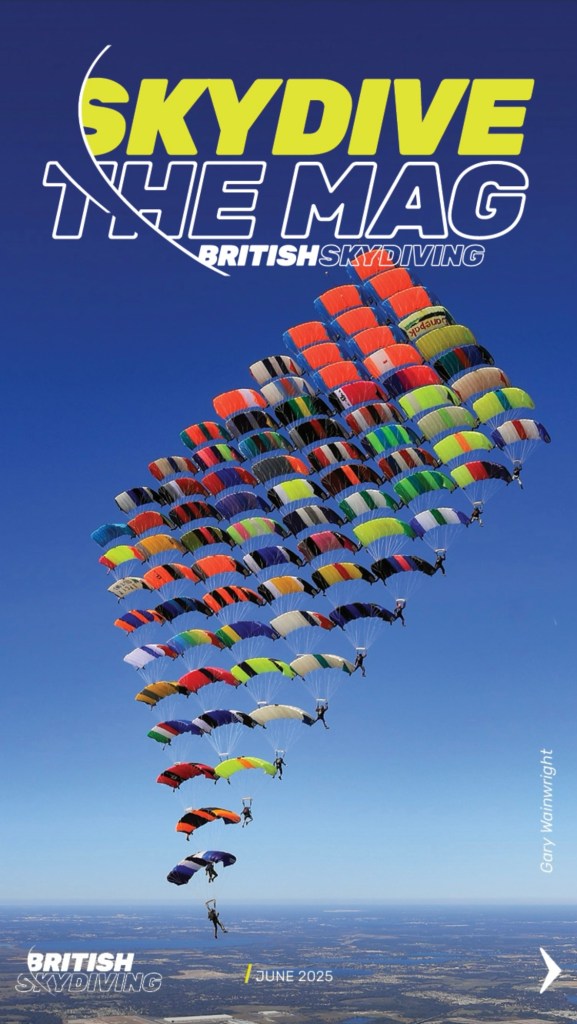
  • Check out Nik’s latest publication in the Skydive the Mag App (British Skydiving). In the “Smarter Every Day” section, he shares his experience recovering from a neck injury—and how to prevent future issues.

    The video below is a compilation of Nik’s first production after coming back from that injury in 2014. It’s…illuminating.

    Fun, true story: a less-than-stellar opening once landed me in the ICU with a spinal cord injury. Sure, there were other factors in play—but I probably would have been fine had it not been for the amount of weight that was on my head that day.These days, safety recommendations have resulted in skydivers being generally more aware of the considerations involved in jumping a camera. You inarguably already know that, if you’re strapping one to your helmet—even “just” a GoPro—you’re adding risk. From there, as your passion for skydiving photography grows, so will your gear. The best time to build safe habits is now, before you’re tempted by the bigger, heavier setups that advanced camera jumping will require…

    Download the app to keep reading…
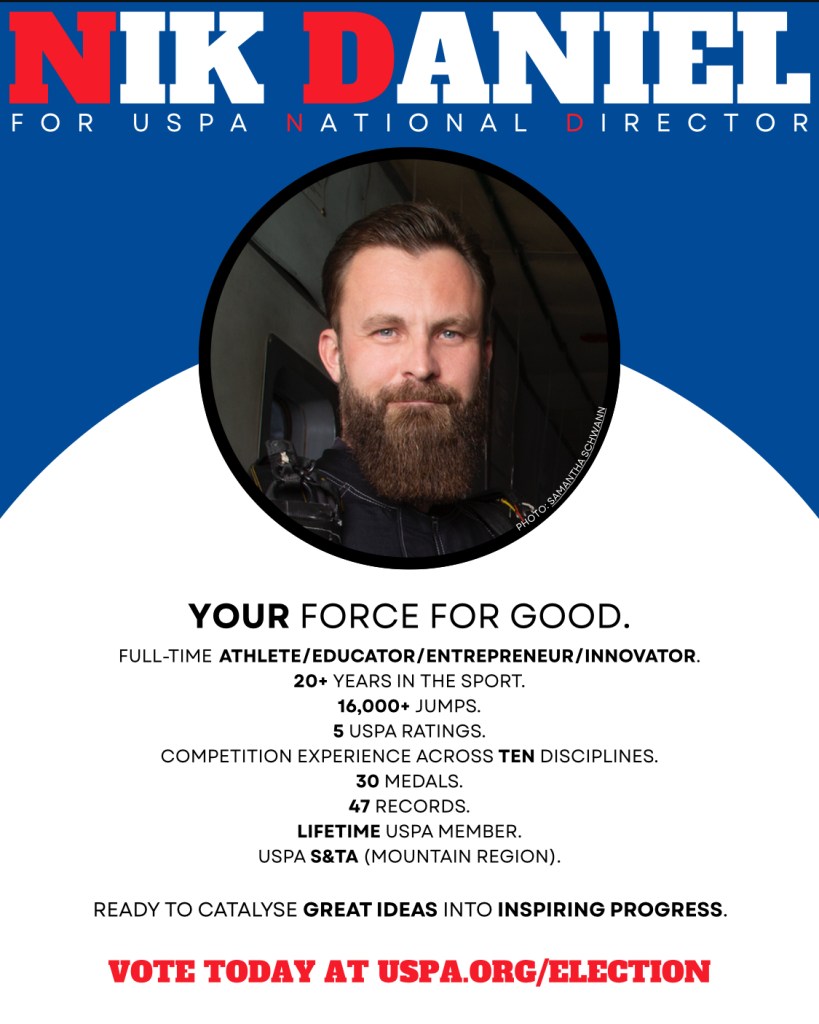
  • USPA will hold a July 15-31 special election to fill the vacancy on the board.

    For more information visit: axisflightschool.com/nd4nd

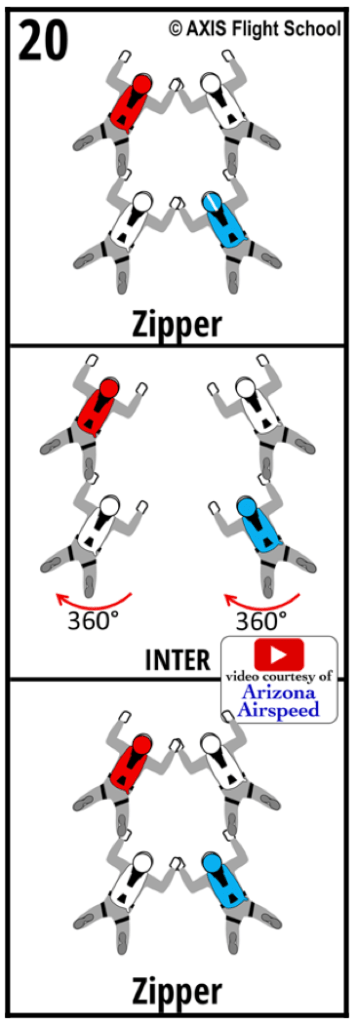
  • The AXIS FS 4-way dive pool images and video have been updated to include the new block 20 (Zipper – Inter – Zipper). The new content is now availble on the AXIS Draw Generator. Video courtesy of Arizona Airspeed / Alex Swindel.

  • Make sure to show Garnett some love by subscribing to his channel.

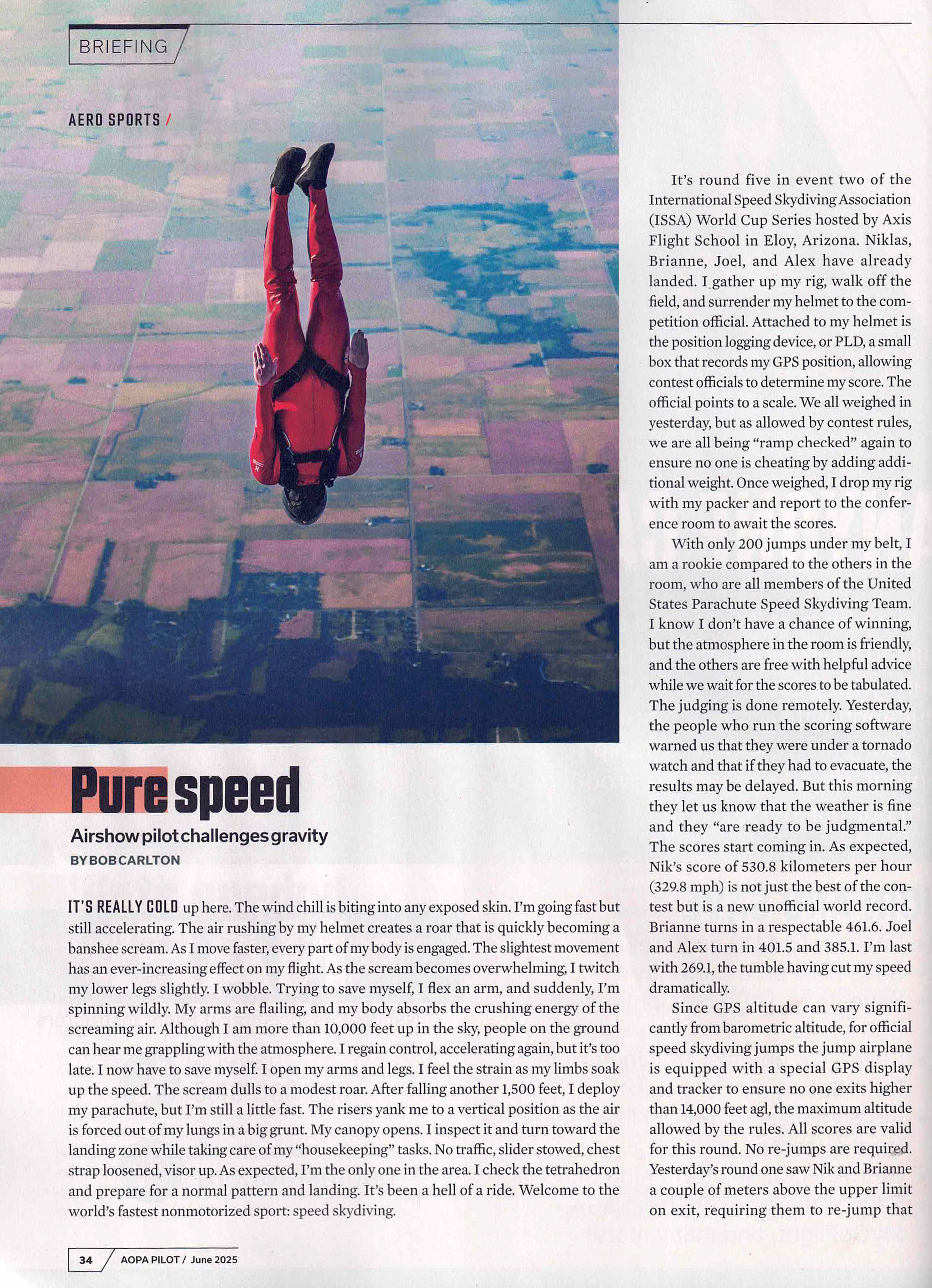
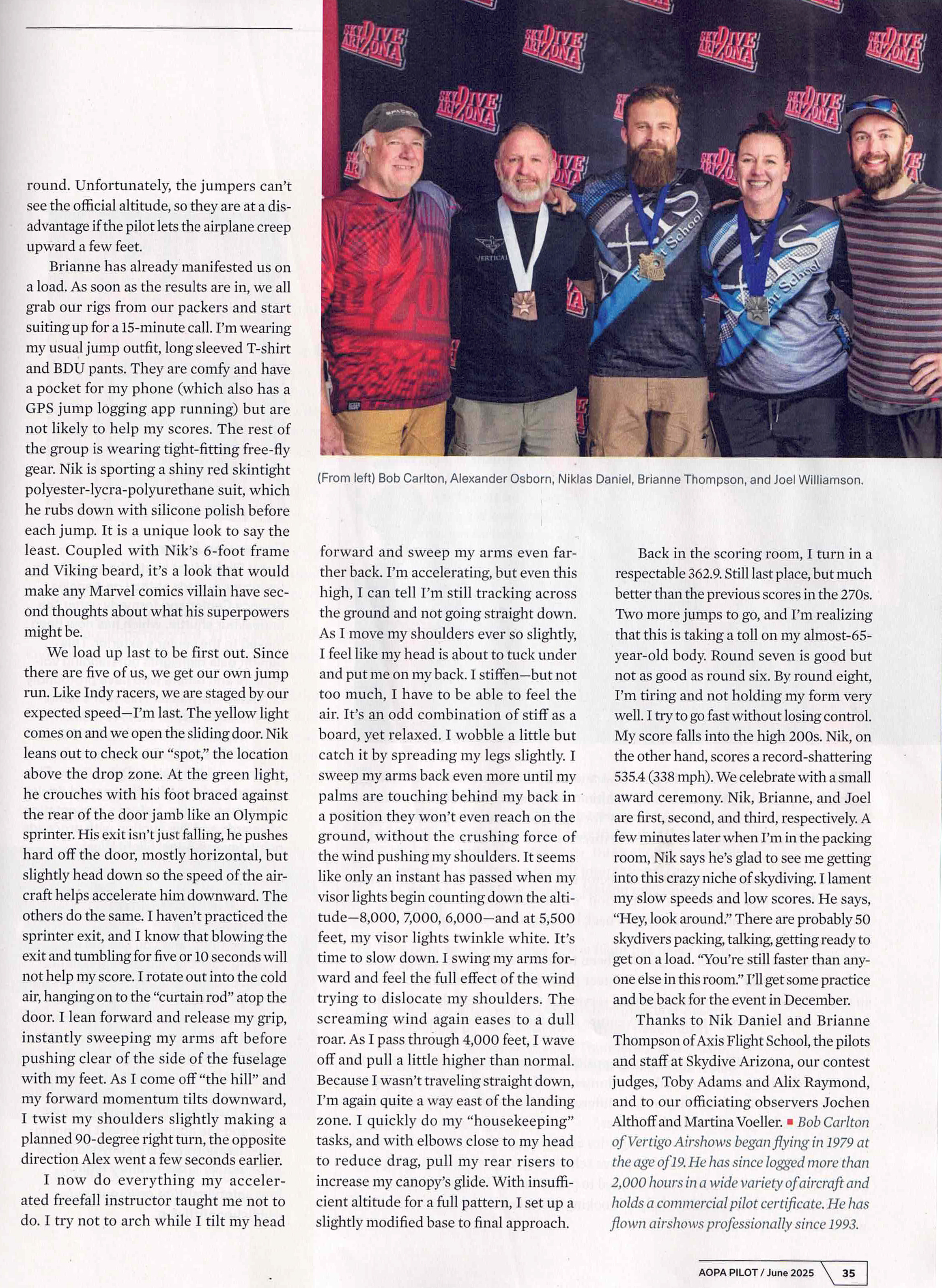
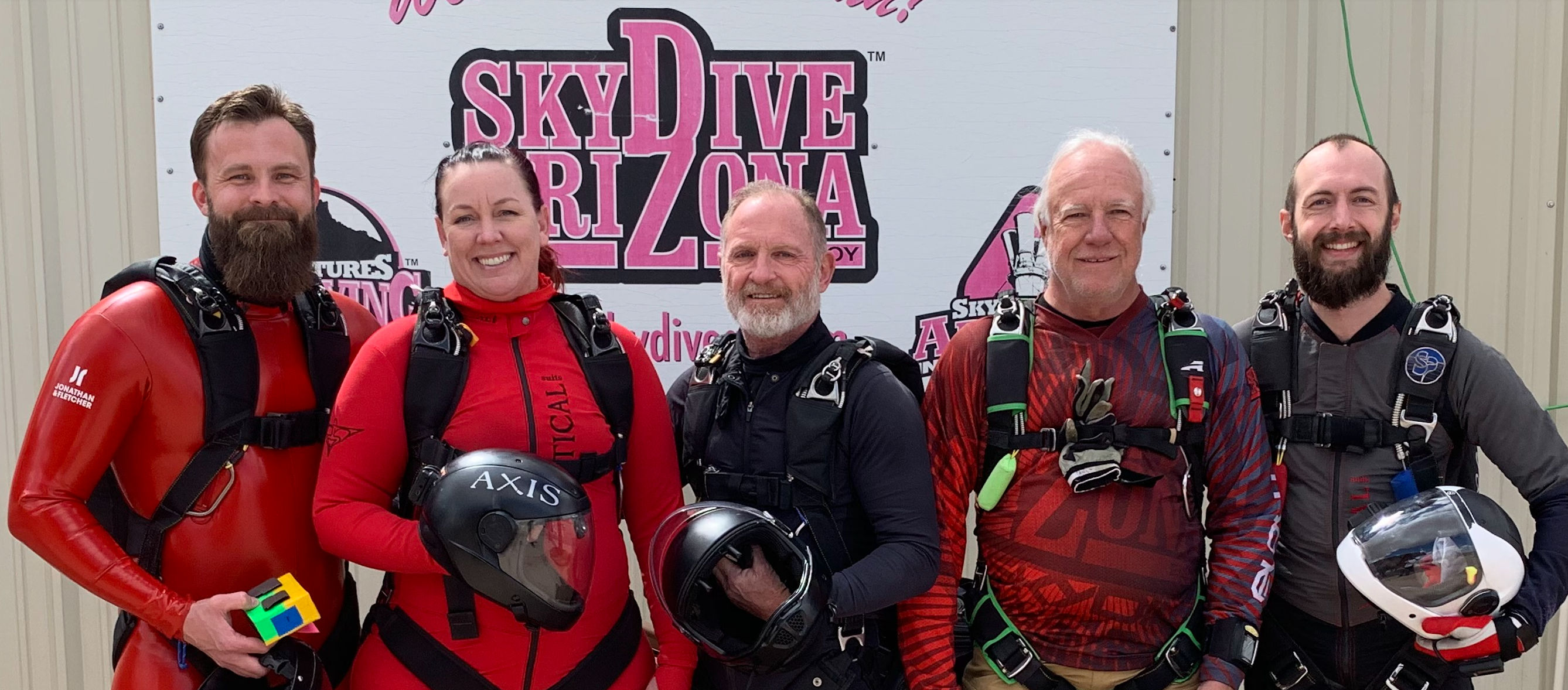
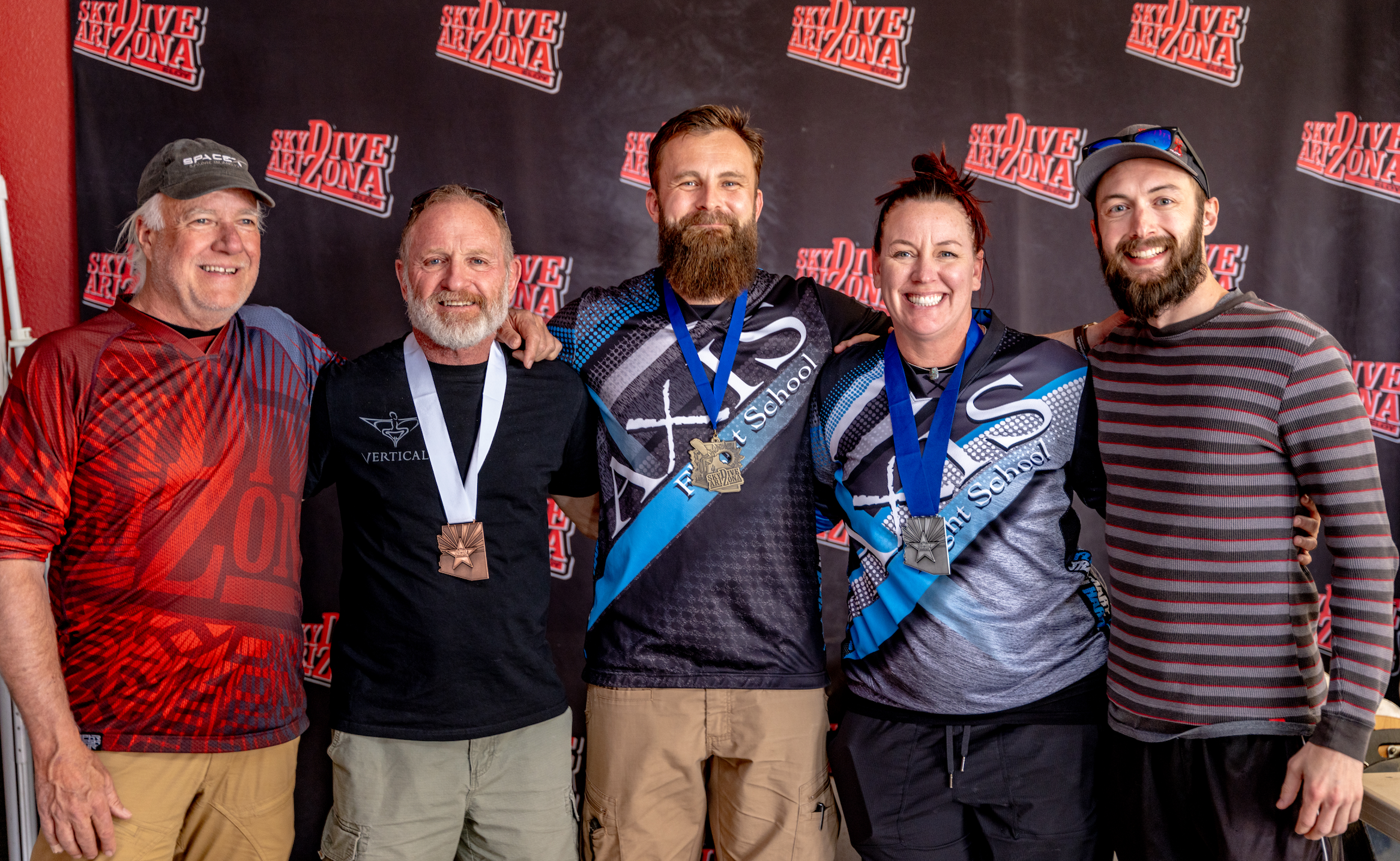
  • The 2nd ISSA World Cup Series Event of 2025 hosted by AXIS Flight School has concluded at Skydive Arizona. Over the weekend five competitors gave it their all to fly as fast as possible.

    From left to right: Niklas Daniel, Brianne Thompson, Joel Williamson, Robert Carlton, Alexander Osborn.
    Photo by Jochen Althoff.
    https://axis.tools/tool_Cond.php

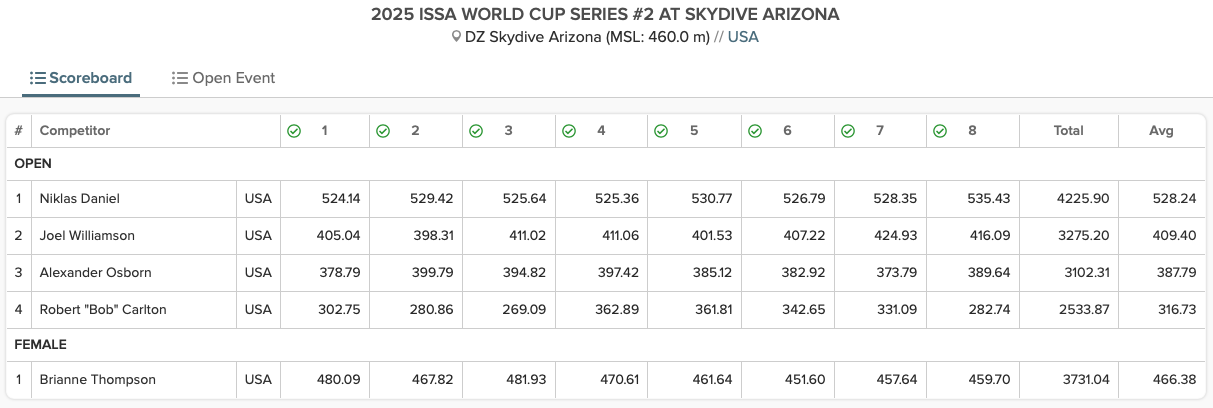
    Although day one brought some clouds and strong winds, the competitors we able to complete four out of eight rounds as intended. The conditions aloft proved challenging, as the winds were recorded in excess of 70mph / 120kmh. On day two the weather was significantly better allowing the competition to complete all eight rounds by 2pm.  

    Current World Champion Niklas Daniel broke his own unofficial world record twice; once in round 5 (530.77kmh / 329.81mph) and again in round 8 (535.43kmh / 332.70mph). Finishing the meet with an average of 528.24kmh gives Nik a strong chance of defending the ISSA Earnest Holford Memorial Sword in the ISSA Finals later this year. World’s fastest female Brianne Thompson took silver in Open and gold in the Female category, while Joel Williamson took bronze in Open.

    Photo by Alex Swindle.
    https://skyderby.ru/events/speed_skydiving/148

    Robert was a newcomer to the discipline and saw his scores improve dramatically as his fellow competitors gave him valuable insights and feedback. Nik, Brianne, Joel, and Alex, who are all on the United States Parachute Team, will be representing the USA at the upcoming 2025 FAI World Cup in Hohenems, Austria. Special thanks to Skydive Arizona and the judging team (Toby Adams and Alix Raymond) who made this event possible. Training for and participating in ISSA events is a great way to learn and get exposure to Speed Skydiving. For information about future events and coaching, visit www.AXISFlightSchool.com

  • Written by Niklas Daniel. Special thanks to Eugene Ciurana for translating! Scroll down for 🇪🇸 Spanish and 🇫🇷 French texts.

    Photo by Michael Brewer

    Do you like to go fast? Would you like to join an incredible community of athletes that are pushing the limits of what is humanly possible? Would you like the opportunity to represent your home country on your pursuit to excellence? Then Speed Skydiving (SP) might be for you. SP is an amazing competitive discipline that has seen steady growth but is mostly dominated by Europeans and Australians. It is time to see more American countries join the race. Looking at you Canada and Latin America!

    What is Speed Skydiving?

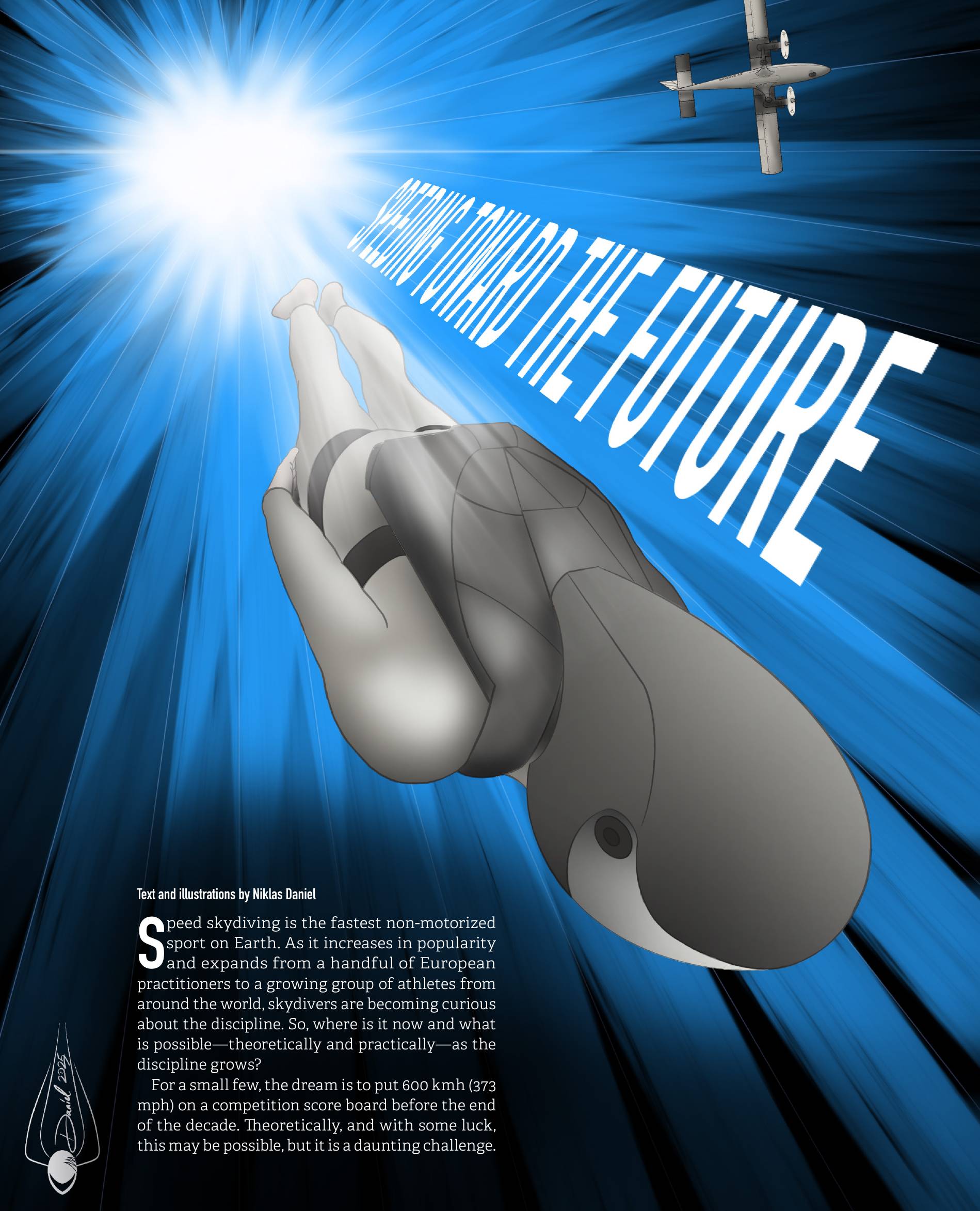
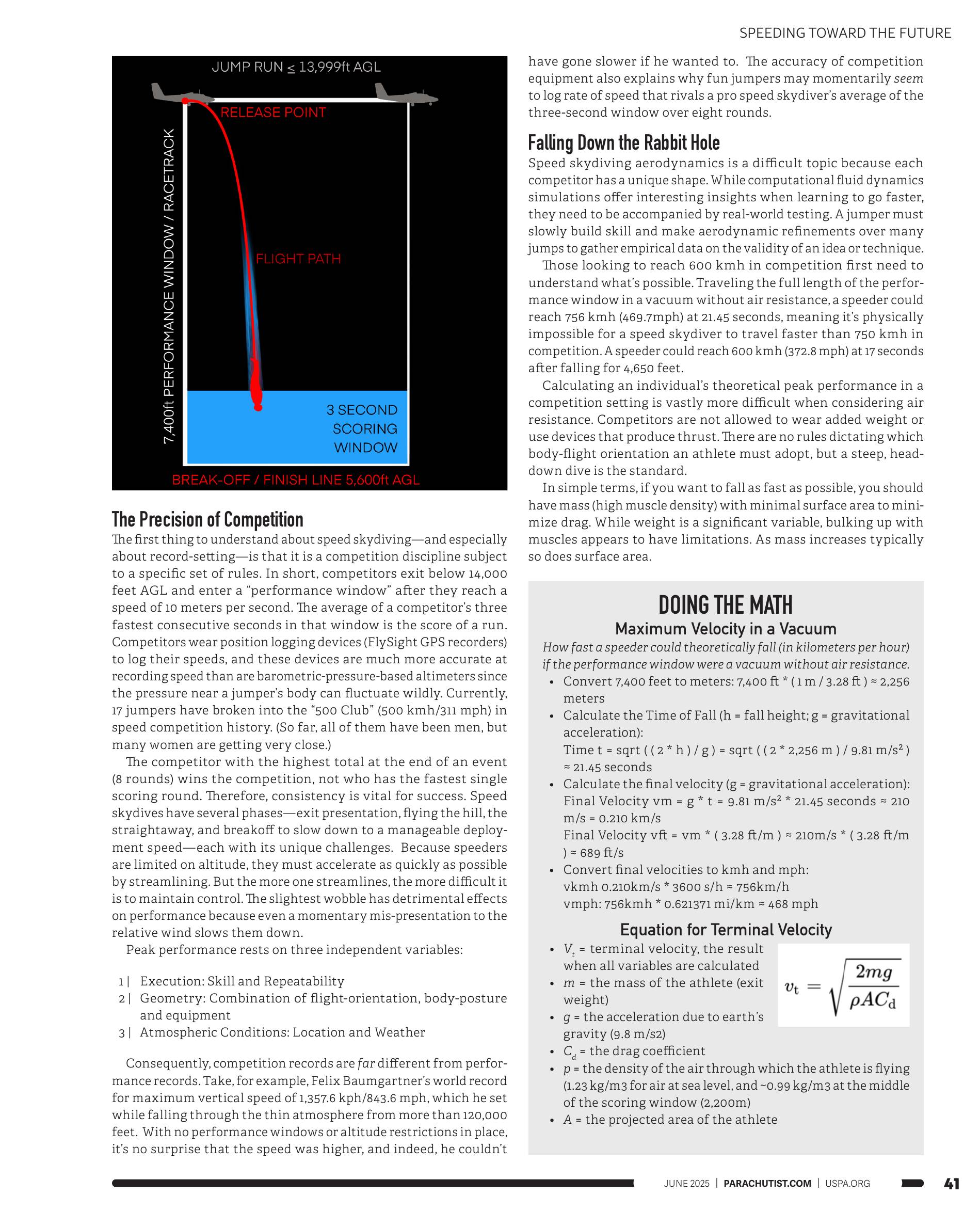
    The goal of a speed skydive is to reach the highest vertical velocity possible. Performance is recorded using GPS over 8 rounds. The athlete with the highest total score at the end of the competition is the victor. There are various subcategories like Open, Female, Junior, Mixed, and National Team. You can have a look at the current Global Eternal Rankings on the ISSA website, which tracks all SP athlete’s top performances. So, take your angle-flying and freefly skills to the next level. SP is a solo activity but is one of the most inclusive and accessible disciplines there is. The community is incredibly friendly, welcoming, and open to sharing their knowledge and experience. SP can be performed from virtually any aircraft and does not require any teammates or videographers – just freefly friendly equipment and a Flysight GPS recorder. The competition rules can be found on the FAI website and safety recommendations in USPA’s Skydiver’s Information Manual 6-13.

    Make History!

    You could be the first speeder to champion your country’s flag at the next FAI Speed Skydiving World Championships in 2026. But to attend a First Category Event (FCE), you will first have to qualify by passing your country’s team selection process. It is worth noting that one does not have to be a National Champion to attend a World Championship. In fact, a national team can have up to 12 members (9/3 by gender). It is up to each National Aviation Authority (NAC) whom to send to an FCE. Contact your country’s ISC delegate and or ISC Judges for more information on how to qualify. In addition, you will need to:

    • hold a valid passport that aligns with the country you wish to represent,
    • have a current international sporting license issued by your NAC that meets FAI standards for Category 1 competitions, and
    • pass potential drug testing – WADA code.

    As you climb the ranks you may even be eligible for competition and performance records. Since there have been so few American countries competing in the discipline there are lots of opportunities to be seized. While it is easy to get started, the discipline offers unique challenges that provide rewarding opportunities for growth over the years. So, what are you waiting for? Do you have the NEED for SPEED? Coaching, skills camps, and ISSA events  are available with Niklas Daniel and Brianne Thompson, the world’s fastest male and female, at AXIS Flight School located at Skydive Arizona. Contact info@AXISFlightSchool.com for more information.


    🇪🇸 Caída Libre de Velocidad Te Busca

    ¿Te gusta volar aprisa?  ¿Te gustaría unirte a una comunidad de atletas increíble, quienes participan y compiten al límite de la capacidad humana?  ¿Te gustaría tener la oportunidad de representar a tu país en tu búsqueda de excelencia?  ¡Caída Libre de Velocidad (Speed Skydiving o SP) es para ti!  SP es una disciplina competitiva e impresionante.  Ha visto gran crecimiento en los países europeos y en Australia.  Ya es hora de que los países americanos se unan a esta carrera.  ¡Los invitamos aquí, Canadá y América Latina!

    ¿Qué es la Caída Libre de Velocidad (SP)?

    La meta de SP es alcanzar la velocidad vertical más alta posible en caída libre.  El desempeño se registra con dispositivos de navegación GPS durante 8 ciclos de saltos.  El atleta ganador será quien tiene el marcador más alto al final de la competencia.  Hay varias sub-categorías como Abierto, Femenil, Mixto, Junior, y Equipo Nacional.  Mira la página de Registro Eterno Global en el sitio web de ISSA (International Speed Skydiving Association), donde están registrados los mejores desempeños de todos los atletas en esta disciplina a nivel mundial.  Impulsa tu habilidad de freefly y vuelo angular al siguiente nivel.  SP es una actividad individual, pero, al mismo tiempo, es una disciplina muy accesible e inclusiva.  La comunidad es muy amigable y abierta a compartir conocimiento y experiencia.  SP se puede practicar desde casi cualquier aeronave y no requiere acompañantes de vídeo o grupo.  Solo se necesita equipo básico de paracaidismo en buen estado y un dispositivo FlySight.  Las reglas de competencia aparecen en el sitio de FIA y las recomendaciones de seguridad están en la sección 6-13 del Manual de Información del Paracaidista (SIM) de la USPA.

    Haz Historia

    Tú podrías ser el primer campeón velocista bajo la bandera de tu país en el siguiente Campeonato Mundial FAI de Caída Libre de Velocidad 2025.  Para atender necesitarías calificar primero en un Evento de Primera Categoría (First Category Event o FCE):  Es importante notar que no es necesario ser campeón nacional para atender un campeonato mundial.  De hecho, un equipo nacional puede tener hasta 12 miembros (9 hombres máximo y 3 mujeres mínimo).  La Autoridad Nacional de Aviación (National Aviation Authority o NAC) de cada país decidirá a quien enviar a eventos FCE.  Comunícate con el delegado del Comité de Paracaidismo Internacional (International Skydiving Committee o ISC) en tu país o con los Jueces de ISC para obtener más información sobre como calificar.  Además, necesitarás:

    • Tener un pasaporte válido del país que representas
    • Tener una licencia internacional vigente otorgada por la autoridad de aviación de tu país (National Aviation Authority o NAC) compatible con los estándares de competencia en Categoría 1
    • Pasar pruebas de doping – ver el código WADA

    Serás elegible para records de competencia y desempeño.  Hay gran oportunidad de destacar en esta disciplina entre los países americanos dado que hay poca participación relativa.  Aunque es fácil comenzar, esta disciplina ofrece retos únicos que resultan en oportunidades de crecimiento atlético y personal con el tiempo.  Así que…  ¡No esperes!  ¿Sientes la NECESIDAD de VOLAR APRISA?  Entrenamiento, cursos de habilidad, y eventos de ISSA están disponibles con el hombre y mujer más rápidos del mundo, Niklas Daniel y Brianne ThompsonVisítanos en AXIS Fight School en Skydive Arizona.  Dale cllick a infо@AXISFlightSchool.com para mayor información.


    🇫🇷 Recherche Toi la Chute Libre de Vitesse Rapide

    Aimes-tu voler vite? Souhaitsz-tu rejoindre une incroyable communauté d’athlètes qui participent et rivalisent aux limites des capacités humaines? Souhaites-tu avoir l’opportunité de représenter ta pays dans ton quête d’excellence? Le Speed Skydiving (SP) est fait pour toi! Le SP est une discipline compétitive et impressionnante.  Il a connu une forte croissance dans les pays européens et en Australie. Il est temps que les pays américains se joignent à cette course. Nous toi invitons ici, Canada et Amérique Latine!

    Qu’est-ce que la Chute Libre à Vitesse Rapide (SP)?

    L’objectif du SP est d’atteindre la vitesse verticale la plus élevée possible en chute libre.  Les performances sont enregistrées avec des appareils de navigation GPS pendant 8 cycles de saut. L’athlète gagnant sera celui qui aura obtenu le score le plus élevé à la fin de la compétition.  Il existe plusieurs sous-catégories telles que Open, Féminin, Mixte, Junior et Équipe nationale.  Consultez la page Global Eternal Record sur le site de l’ISSA (International Speed ​​​​Skydiving Association), où sont enregistrées les meilleures performances de tous les athlètes de cette discipline à travers le monde.  Améliorez tes compétences en vol libre et en vol angulaire.  Le SP est une activité individuelle, mais en même temps, c’est une discipline très accessible et inclusive.  La communauté est très amicale et ouverte au partage de connaissances et d’expériences.  Le SP peut être pratiqué à partir de presque tous les avions et ne nécessite pas de vidéo ni de compagnons de groupe.  Tout ce dont vous avez besoin est un équipement de parachutisme de base en bon état et un appareil FlySight.  Les règles de compétition figurent sur le site Internet de la FIA et les recommandations de sécurité se trouvent dans la section 6-13 du Manuel d’information pour parachutistes de l’USPA (SIM).

    Faires l’Histoire

    Tu pourries être le premier champion de sprint sous le drapeau de ta pays aux prochains championnats du monde de vitesse en chute libre de la FAI en 2025.  Pour tu qualifier, devres d’abord tu qualifier dans un événement de première catégorie (FCE):  Il est important de noter qu’il n’y a pas Il faut être champion national pour participer à un championnat du monde.  En fait, une équipe nationale peut compter jusqu’à 12 membres (9 hommes maximum et 3 femmes minimum).  L’Autorité Nationale de l’Aviation (NAC) de chaque pays décidera qui envoyer aux événements FCE.  Contactes ton délégué du Comité international de parachutisme (ISC) dans ta pays ou les juges de l’ISC pour plus d’informations sur la façon de tu qualifier.  De plus, tu aures besoin de:

    • Avoir un passeport valide du pays que représentes
    • Être titulaire d’une licence internationale valide délivrée par l’autorité aéronautique de votre pays (National Aviation Authority ou NAC) compatible avec les normes de compétence de la catégorie 1
    • Réussir les tests antidopage – voir le code de WADA

    Seres admissible aux records de compétition et de performance.  Il y a une grande opportunité de se démarquer dans cette discipline parmi les pays américains étant donné que la participation relative est faible.  Bien que facile à démarrer, cette discipline offre des défis uniques qui se traduisent par des opportunités de croissance athlétique et personnelle au fil du temps.  Alors…  N’attendez plus!  Ressentez-tu le BESOIN de VOLER VITE?  Des formations, des cours de compétences et des événements ISSA sont disponibles avec l’homme et la femme plus rapides du monde, Niklas Daniel et Brianne Thompson. Venes nous rendre visite à l’école AXIS Flight School à Skydive Arizona.  Cliques sur info@AXISFlightSchool.com pour plus informations.